How Guides Track the Great Migration: (Behind-the-Scenes).
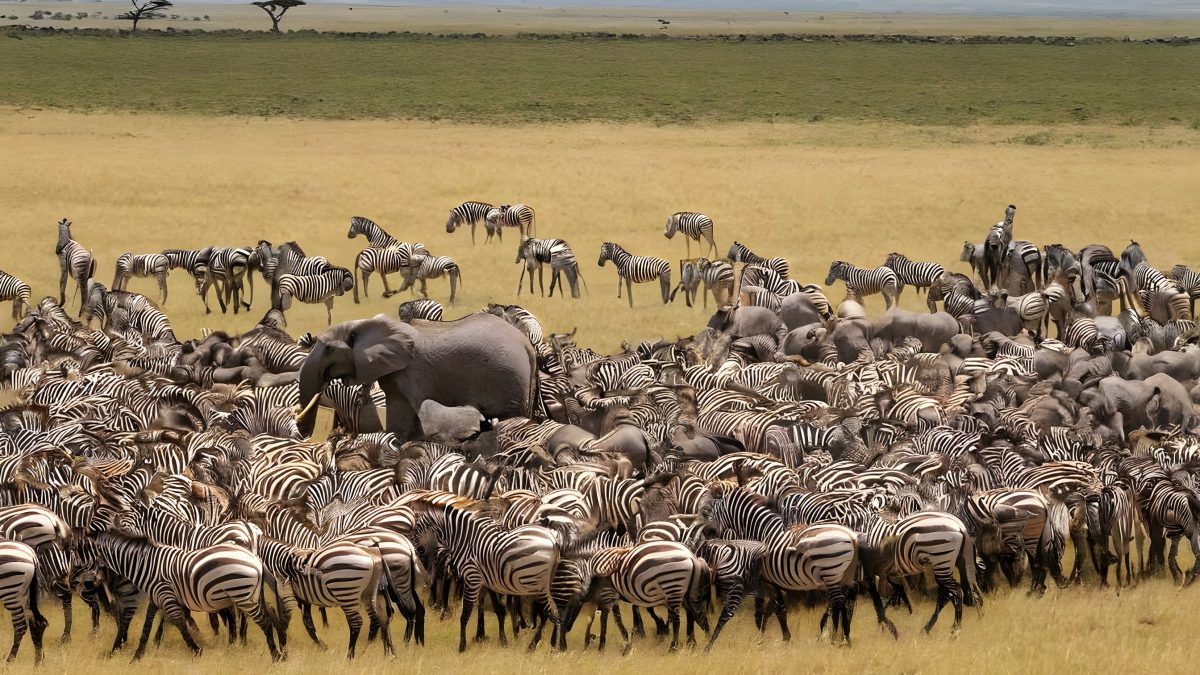
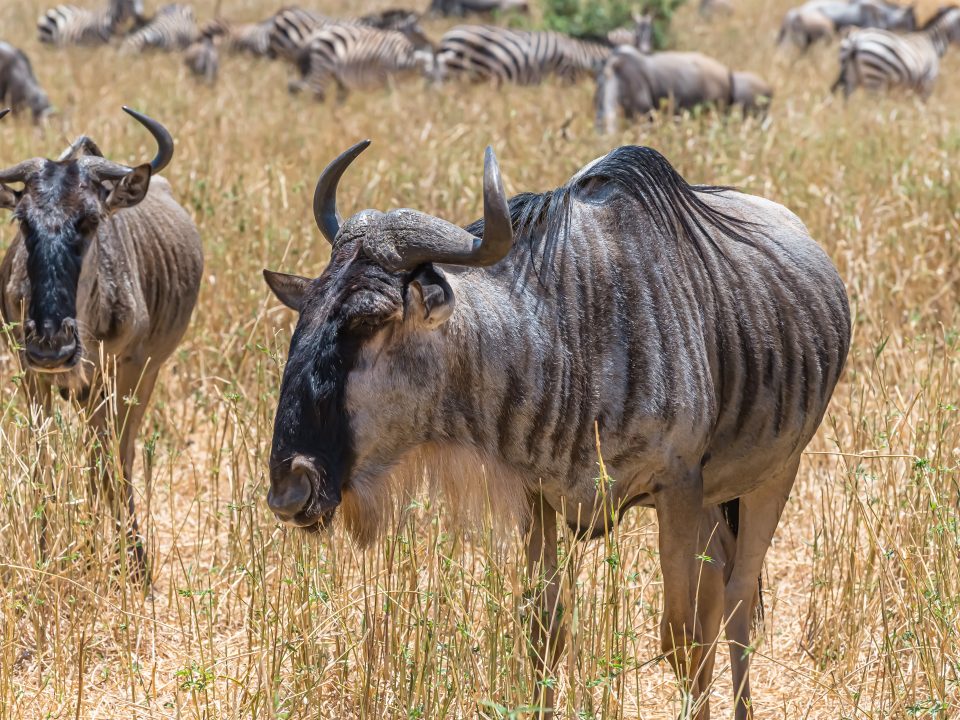
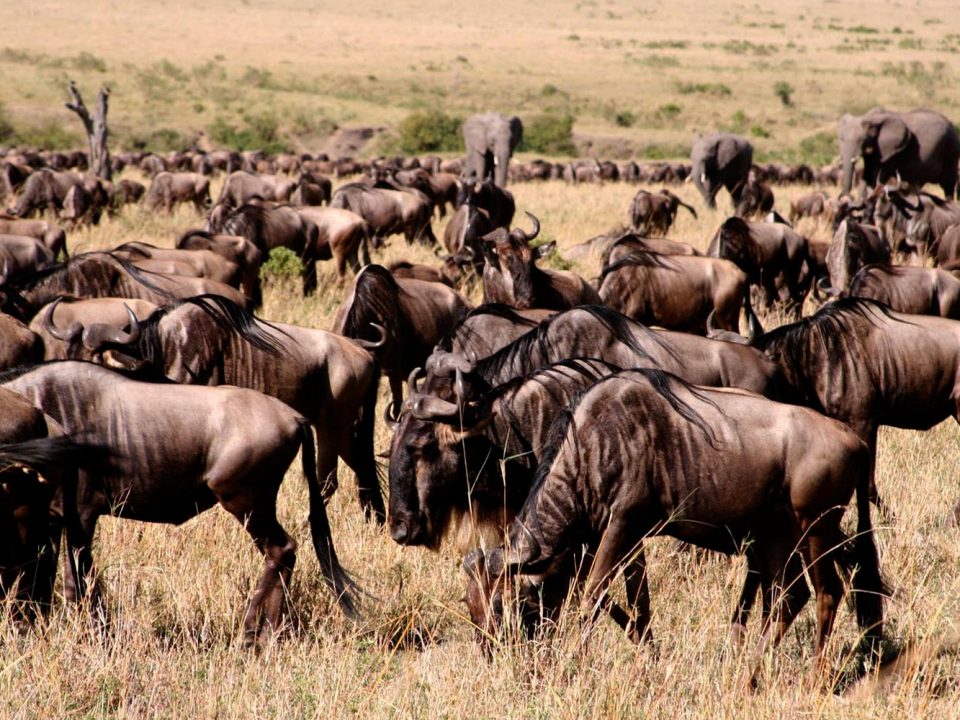
Great Migration appears effortless from the back of a game vehicle a vast and ancient spectacle unfolding on cue. But behind every perfectly timed river crossing sighting lies a network of skill, technology, communication, and hard-won wisdom that most visitors never glimpse. Every year, millions of wildebeest, zebra, and gazelle move across Serengeti-Mara ecosystem in one of the most celebrated wildlife spectacles on earth. And every year, thousands of tourists arrive expecting a straightforward show a natural event that runs on schedule, in a fixed location, at a predictable time.
Experienced guides know better. The Great Migration is one of the most dynamic, unpredictable, and logistically challenging wildlife phenomena to track on the African continent. It responds not to calendars but to rainfall, grass growth, river levels, predator pressure, and a collective animal intelligence refined over a million years of evolutionary pressure. Tracking it requires a combination of modern technology, traditional bush knowledge, inter-camp communication networks, and the kind of patient, attentive observation that only years of field experience can develop.
This article brings you how it is done and why the guides who do it well are among the most skilled wildlife professionals in the world.
Rainfall Radar and Weather Monitoring.
The migration begins not with wildebeest but with rain. The entire migration is driven by rainfall patterns and grass growth cycles the herds follow fresh grazing with remarkable precision, responding to rainfall events that occur hundreds of kilometers from their current position.
Experienced guides and camp managers across the Serengeti-Mara ecosystem monitor rainfall data and weather forecasts with the same attentiveness that a ship’s captain monitors ocean charts. Satellite weather applications, regional meteorological reports, and direct observation of cloud formation and rainfall events all inform predictions about where the grass will be greening and therefore where the herds will be moving in the days and weeks ahead.
This weather intelligence forms the first and most fundamental layer of migration tracking. Without understanding the rainfall patterns that drive the herds, every other piece of information is context without meaning.
The Spotter Network: Eyes Across the Ecosystem.
The most reliable and immediate source of migration intelligence is not a satellite or a smartphone application it is a human being sitting in a vehicle on the ground, watching and communicating in real time. Across the Serengeti-Mara ecosystem, guides operate as an informal but highly effective intelligence network, sharing information about herd movements, river crossing activity, and predator sightings through radio communication and mobile messaging groups.
In Masai Mara, dedicated migration spotter vehicles from the larger camps and conservancies patrol the Mara River banks daily during the July to October crossing season, communicating the position and behavior of wildebeest herds to guides across the reserve. When a herd is observed gathering at a crossing point the nervous, milling behavior that precedes a crossing radio message go out immediately across the network, drawing vehicles from across the reserve to the site.
This spotter network is the backbone of the crossing experience. The guides who manage it most effectively sharing information generously, repositioning vehicles quickly, and reading herd behavior accurately consistently deliver the crossing sightings that their guests remember for the rest of their lives.
Reading Animal Behavior: The Art of Anticipation.
Technology and communication networks are essential tools. But the finest migration guides rely most fundamentally on something that cannot be downloaded or transmitted the ability to read animal behavior with accuracy and anticipation.
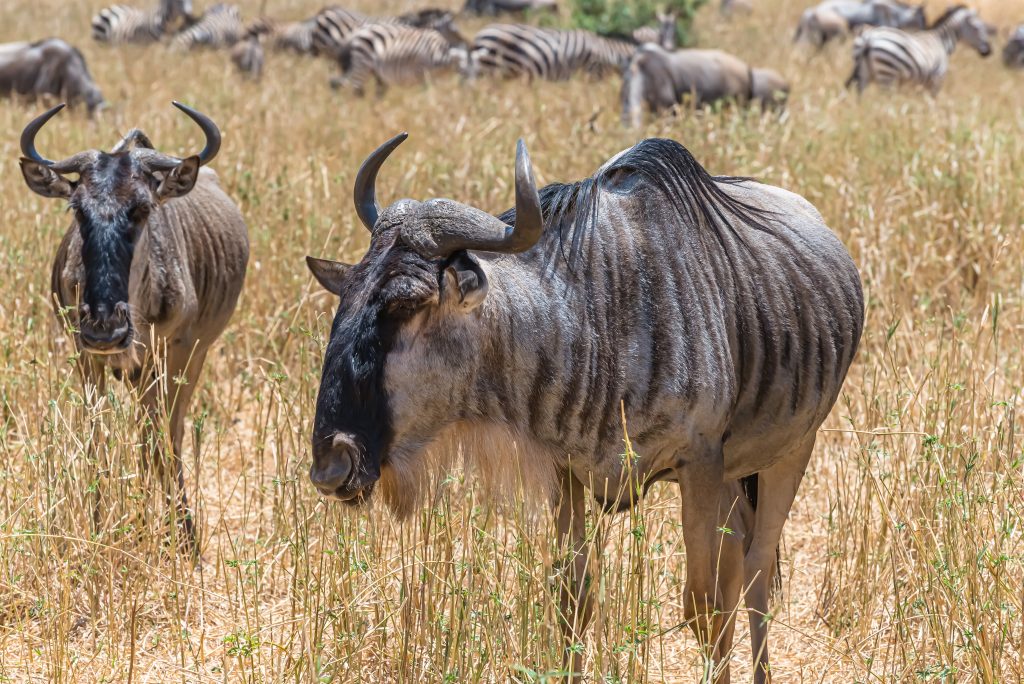
Wildebeest approaching a potential crossing point display a recognizable sequence of behaviors that experienced guides learn to interpret with remarkable precision. The initial gathering of animals on the bank. The nervous forward movement toward the water’s edge, followed by retreat. The growing density of animals pressing from behind. The specific posture and orientation of individuals at the front of the herd. The moment when the collective nervous energy reaches the threshold that will trigger the crossing.
Guides who can read these signals accurately can position their vehicles at the optimal point on the riverbank not too close to disturb the animals, not so far that the action is obscured fifteen to thirty minutes before the crossing begins. Those who cannot read them may arrive after it is over, or wait for hours at a crossing point where the animals have already decided, for reasons no human can fully predict, to turn back.
This behavioural literacy is built over years of observation, discussion with senior guides, and the kind of attentive daily engagement with wildlife that transforms field experience into genuine expertise.
Aerial Surveillance and Technology.
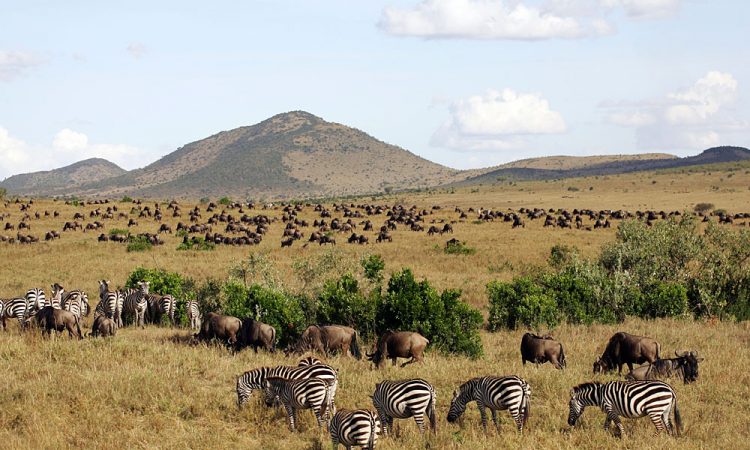
An increasing number of camps and conservancies across Serengeti-Mara ecosystem now supplement ground-level tracking with aerial surveillance. Light aircraft and microlight flights over the migration corridors provide a perspective on herd movements and distribution that is simply impossible to achieve from the ground allowing camp managers and senior guides to identify the approximate location of the main herds, assess the direction of movement, and plan game drive routes accordingly.
Drone technology, where permitted by park regulations, offers a further dimension of aerial observation providing real-time imagery of herd behavior at crossing points without the disruption of low aircraft. The integration of this aerial intelligence with ground-level spotter reports creates a tracking picture of considerable accuracy and detail.
Digital platforms and migration tracking applications some developed specifically for the safari industry, others adapted from broader wildlife monitoring tools aggregate ground reports, weather data, and historical movement patterns into predictive models that guide camps use to plan guest itineraries weeks in advance. These tools do not eliminate uncertainty but they substantially reduce it, allowing the most prepared guides to position their guests with a precision that would have been impossible a decade ago.
Community Knowledge: The Maasai Dimension.
In the Masai Mara, the single most underappreciated source of migration intelligence is also the oldest the traditional ecological knowledge of the Maasai community whose ancestral territory encompasses much of the ecosystem.
Maasai pastoralists have observed the movement of wildlife across the Mara ecosystem for generations. Their knowledge of seasonal grass growth patterns, water source availability, and historical migration routes is encoded in a deep and detailed understanding of the landscape that no technology can fully replicate. The finest Maasai guides bring this traditional knowledge into direct and productive dialogue with modern tracking tools combining generations of accumulated observation with real-time satellite data to produce a quality of migration intelligence that is greater than either source could provide alone.
Many of the most respected and sought-after guides in the Masai Mara are Maasai men whose childhood was spent herding cattle across the same plains that the wildebeest now cross — and whose understanding of the land, the grass, the water, and the weather carries a depth and intimacy that formal training alone cannot provide.
River Crossing: A Test of Every Skill.
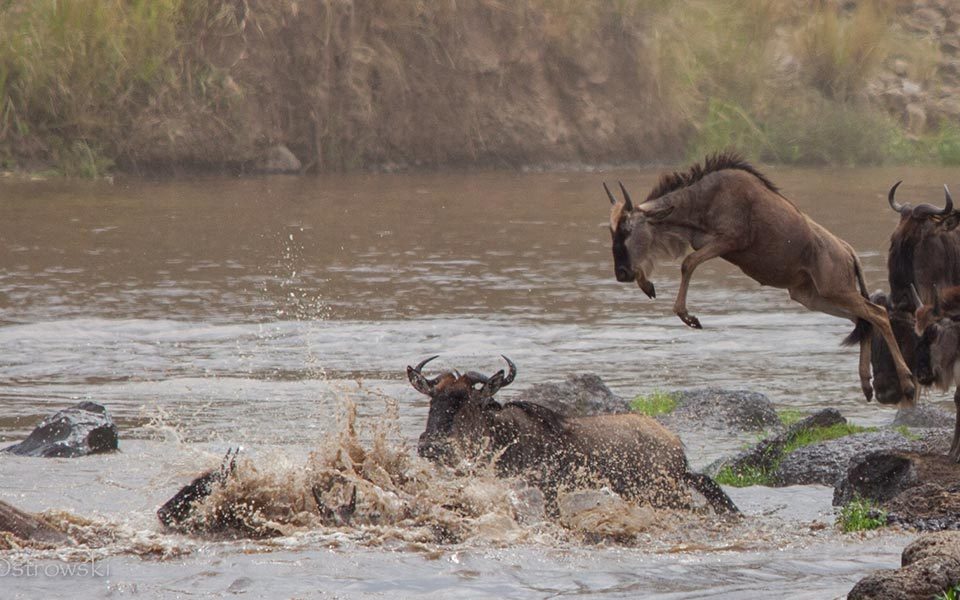
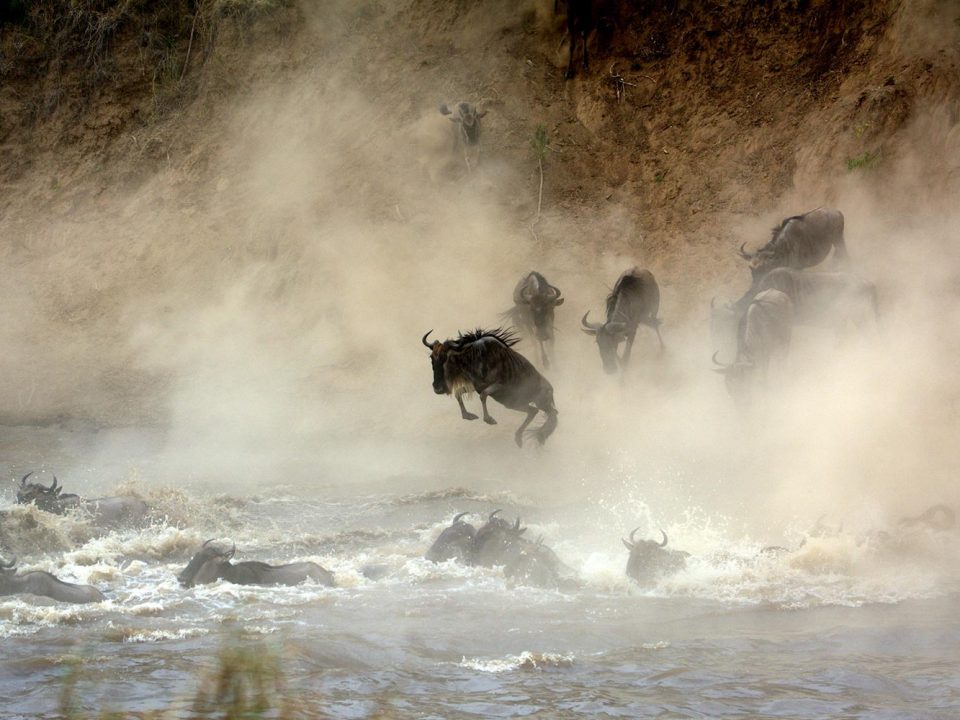
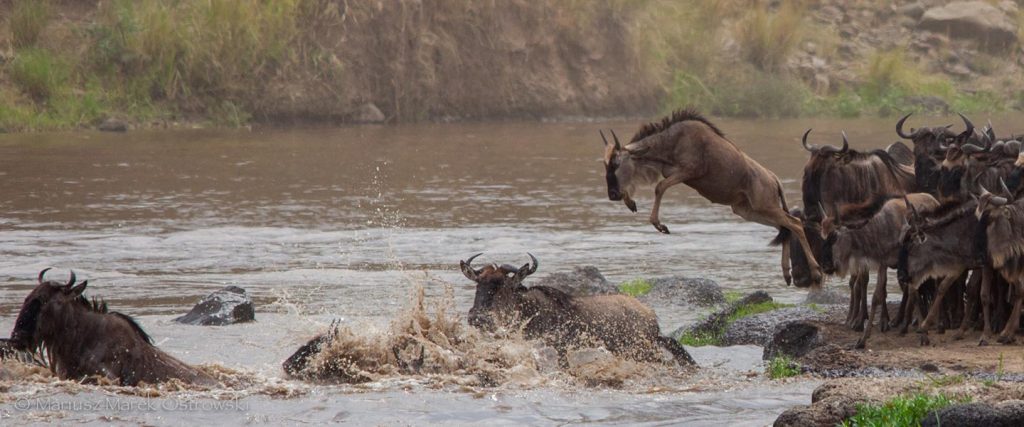
Mara River crossing the defining moment of the migration season is where every layer of the guide’s tracking skill is tested simultaneously. Weather intelligence, spotter network information, behavioural observation, vehicle positioning, and patience must all converge in a single, extended, and entirely unpredictable moment.
Experienced guides know that crossings cannot be forced or predicted with certainty. A herd that has been gathered at the riverbank for three hours, showing every behavioural signal of imminent crossing, can disperse entirely in minutes for reasons that remain opaque even to the most experienced observer. A crossing that begins in one location can shift suddenly to another. Animals that appeared committed to the water can reverse course at the last moment, triggering a chain reaction that scatters thousands of individuals back into the plain.
The guides who deliver crossing sightings most consistently are not those who are luckiest they are those who are most prepared, most patient, and most skillfully positioned. They arrive early, stay late, read the animals with disciplined attentiveness, and trust the accumulated knowledge of their network, their training, and their own experience over the false comfort of certainty.
Why This Matters to the Traveler.
Understanding how migration tracking works transforms the experience of watching the Great Migration from passive observation into genuine appreciation. The perfectly timed arrival at a river crossing that feels effortless from the back of a game vehicle is, in reality, the product of hours of preparation, communication, observation, and expertise. The guide who delivers it has drawn on weather data, community networks, years of field experience, and a deep and respectful attentiveness to the animals themselves.
For the traveler who takes the time to understand this to ask their guide how they knew where to go, what signals they were reading, what their spotter network was telling them the Serengeti-Mara safari becomes not simply a wildlife experience but an education in one of the most sophisticated and fascinating fields of natural science in practice anywhere on earth.