How to Increase Your Chances of Seeing the Great Migration.
Witnessing the Great Migration is one of the most sought-after wildlife safari experiences on earth. But with the right knowledge, timing, and preparation, what many travelers leave to chance can become something far more reliably and profoundly achievable. The single most important step toward increasing your chances of seeing the Great Migration is understanding what it actually is and dispensing with the misconception that it is a single, fixed event that happens at a predictable time in a predictable place.
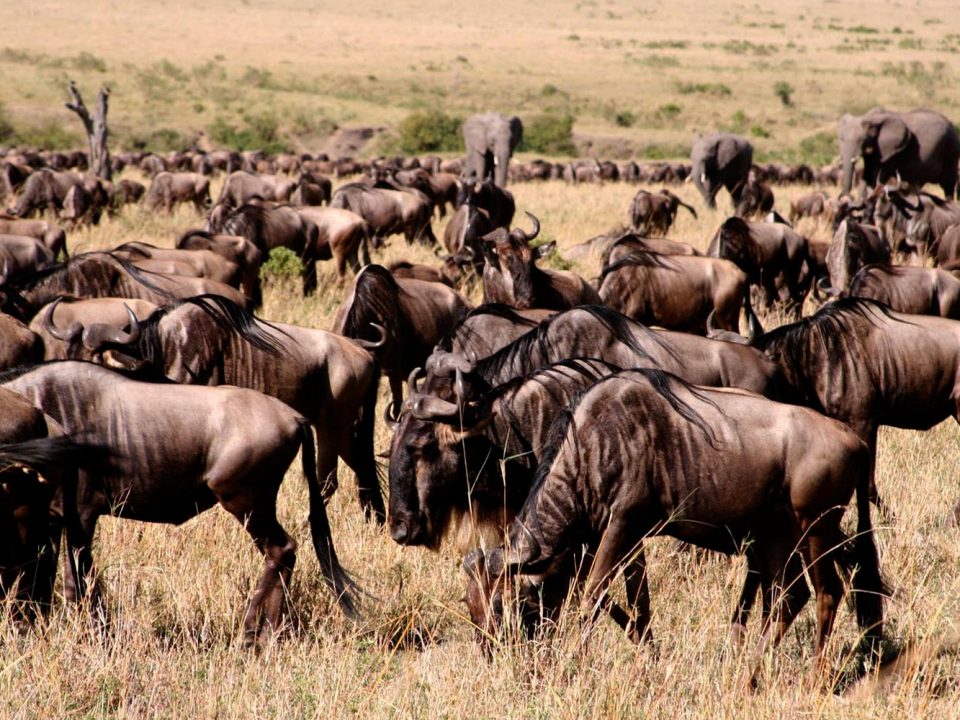
The Great Migration is a continuous, year-round cycle involving approximately 1.5 million wildebeest, 500,000 Thomson’s gazelle, and 200,000 zebras moving perpetually across the Serengeti-Mara ecosystem in response to rainfall and grass growth. It does not begin in July and end in October. It does not happen exclusively at the Mara River. And it cannot be guaranteed at any specific location on any specific day not by the most experienced guide, the most sophisticated tracking technology, or the most carefully planned itinerary.
What can be significantly increased, however, is the probability of encountering the migration in its most dramatic and memorable forms through informed timing, strategic destination choice, an understanding of the seasonal movement patterns, and a practical approach to booking and logistics that maximizes flexibility without sacrificing comfort.
Choose the Right Time for the Experience You Want.
The most fundamental decision in planning a migration safari is identifying which aspect of the migration you most want to witness because the different phases of the annual cycle offer entirely different experiences and occur in entirely different locations.
River Crossings; July to October.
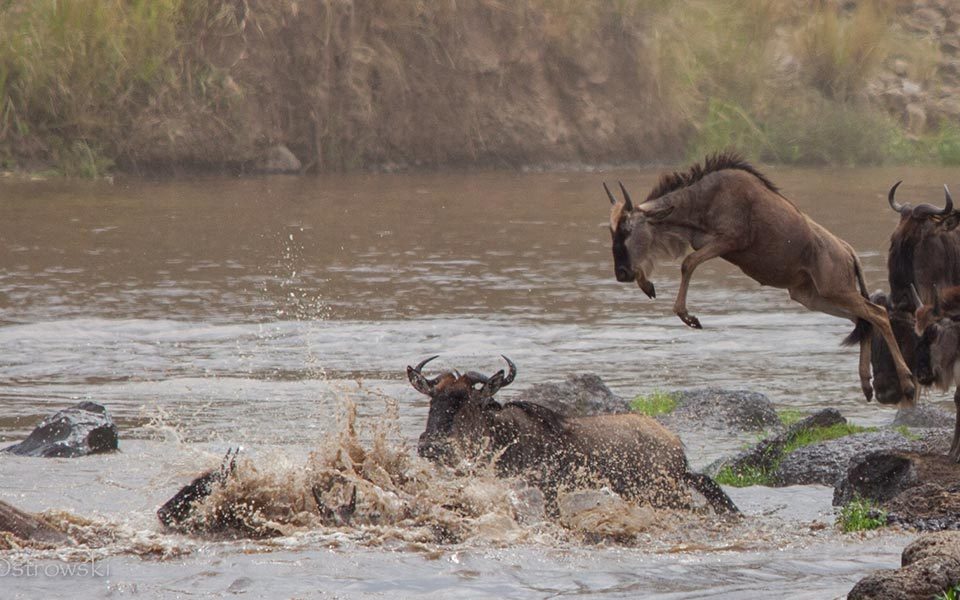
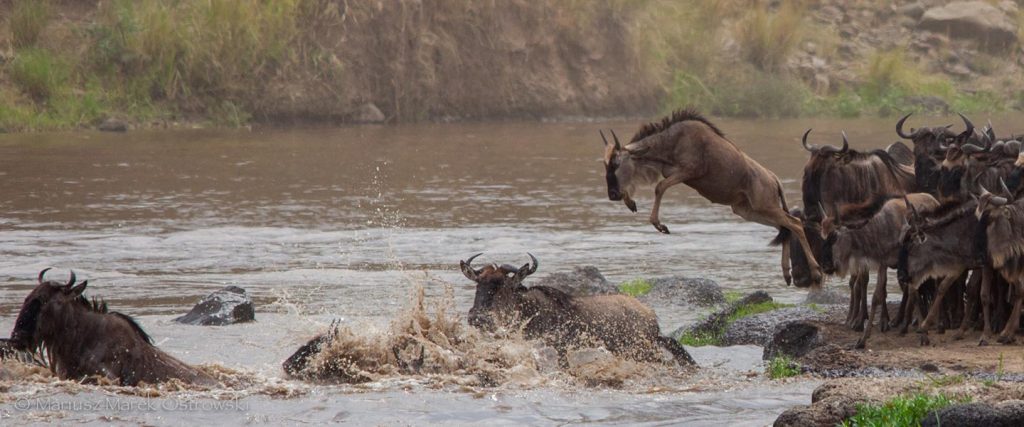
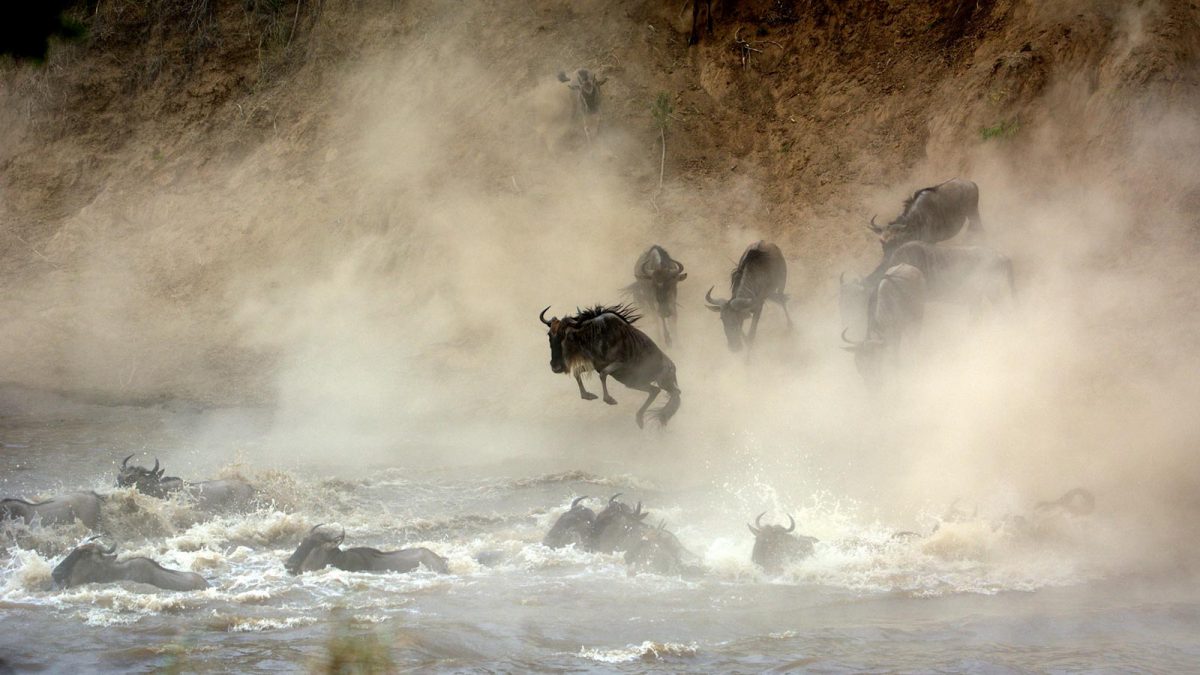
The Mara River crossings between Kenya’s Masai Mara and Tanzania’s northern Serengeti are the most famous and most dramatic moments of the migration calendar the scenes that define the global imagination of this extraordinary event. The wildebeest crossings at their peak occur between July and October, with August and September typically offering the highest frequency and volume of crossing activity.
For the traveler whose main ambition is witnessing a Mara River crossing, this is the window but it is also the busiest and most expensive period across the Serengeti-Mara ecosystem. Booking accommodation and game vehicle arrangements at least six to twelve months in advance is not merely advisable during this period it is essential.
Calving Season; January to March.
The calving season on Tanzania’s southern Serengeti plains between January and March is, in many experienced travelers’ assessments, as extraordinary as the river crossings and considerably less appreciated or anticipated. Approximately half a million wildebeest calves are born within a concentrated window of two to three weeks, creating a spectacle of new life and ferocious predator activity that produces some of the most intense and intimate wildlife encounters in the entire migration cycle.
The southern Serengeti during calving season is less congested than the Mara during peak crossing season, and the quality of game viewing with cheetahs, lions, hyenas, and wild dogs all converging on the abundance of vulnerable calves is consistently exceptional. For the traveler with flexibility in their timing, this is one of the most rewarding and underutilized windows in the migration calendar.
Northern Serengeti; June to July.
The period between June and July, when the herds are moving northward through the central and northern Serengeti toward the Mara River, offers outstanding migration viewing in Tanzania with considerably fewer vehicles than the Masai Mara’s peak season. The Grumeti River crossings in the western Serengeti during June and July less famous than the Mara crossings but no less dramatic represent a genuinely exceptional and relatively uncrowded migration encounter.
Stay Longer Than You Think You Need To.
The single most effective practical step any traveler can take to increase their chances of witnessing a Mara River crossing is to stay longer. A one-night or two-night stay in the Masai Mara or northern Serengeti during crossing season gives the traveler a small window of time in which to encounter one of the most unpredictable events in the natural world. A three-to-five-night stay multiplies the available opportunities proportionally and dramatically.
Experienced guides consistently emphasize this point. River crossings are not scheduled performances they are events driven by collective animal behavior that can occur at any time of day, can happen multiple times in a single day, or can fail to materialize at a particular crossing point for days at a time. The traveler who commits three to five days to a single crossing location during peak season is very likely to witness at least one crossing. The traveler who allocates a single morning is, at best, gambling on fortune.
Choose Your Camp Location Strategically.
Where you stay within the Serengeti-Mara ecosystem has a direct and significant impact on your migration encounter prospects. Closeness to the Mara River during crossing season is the most critical location factor camps positioned within thirty minutes of the primary crossing points provide a decisive practical advantage over those requiring a one-to-two-hour transfer before crossing activity can be reached.
In the Masai Mara, camps within the Mara North Conservancy, the Olare Motorogi Conservancy, and the Naboisho Conservancy offer outstanding proximity to crossing points combined with the additional advantages of limited vehicle numbers, off-road driving permissions, and night game drive availability. In the northern Serengeti, camps in the Lamai and Kogatende areas are positioned closest to the main Mara River crossing sites on the Tanzanian side.
The advantage of conservancy camps over national reserve camps during peak crossing season is not merely one of proximity it is one of quality. The vehicle limits enforced by conservancy management mean that crossing events are witnessed by a handful of vehicles rather than the larger congregations that can form at the most popular reserve crossing points, producing an experience of considerably greater intimacy and emotional impact.

Be Patient, Be Present, and Be Ready to Wait.
Every experienced migration observer eventually arrives at the same conclusion that the river crossing rewards patience above all other qualities. Guides who consistently deliver crossing sightings are not those who visit a crossing point briefly and move on they are those who arrive early, stay late, and maintain attentive observation of the herd’s behavior through hours of apparent inactivity, alert to the subtle signals that precede the threshold moment when the animals commit to the water.
The most important practical advice for any traveler at a Mara River crossing point is simple and requires no special knowledge or equipment to implement stay longer than feels comfortable, resist the temptation to leave for another sighting, and maintain the patient attentiveness that the crossing demands and rewards. The traveler who leaves the riverbank thirty minutes before the crossing begins is a figure of considerable and recurring tragedy in the collective memory of every Masai Mara guide. Do not be that traveler.
Consider the Less Famous Alternatives.
The northern Serengeti’s crossing points on the Tanzanian side of the Mara River offer a migration encounter of equal drama and considerably lower vehicle density than the Kenyan side during peak season. The Grumeti River crossings in western Serengeti offer a genuinely exceptional crossing experience in June and July with remarkable exclusivity. And the calving season on the southern Serengeti, as noted earlier, offers a migration encounter of a profoundly different but equally rewarding character one that most first-time migration travelers have never considered and that consistently exceeds the expectations of those who do.
Diversifying beyond the single crossing-season Masai Mara experience is not a consolation strategy it is a genuinely superior approach to the migration for the traveler willing to engage with the full annual cycle of this extraordinary natural phenomenon.
Practical Checklist for Maximizing Your Migration Encounter.
Timing; identify which migration phase you want to witness and plan your dates accordingly, with calving season, Grumeti crossings, and Mara crossings each offering distinct experiences at different times of year.
Duration; allocate a minimum of three nights at your main crossing location during the river crossing season, and five nights if budget and time allow.
Location; go for a place that is close to the main crossings, and the conservancy areas provide you with more advantages due to few safari vehicles and access off road.
Quality of guides; do some homework on your guide and the spotting network at the camp prior to booking, and keep yourself informed on migration intelligence.
Flexibility; build flexibility into your daily itinerary rather than scheduling every game drive around other activity, allowing extended time at crossing points when the herds are active.
Patience; commit to the crossing point, resist the impulse to leave prematurely, and trust the process that every experienced guide in the ecosystem has spent years learning to read.