Serengeti vs Masai Mara Migration: Where Should You Go.
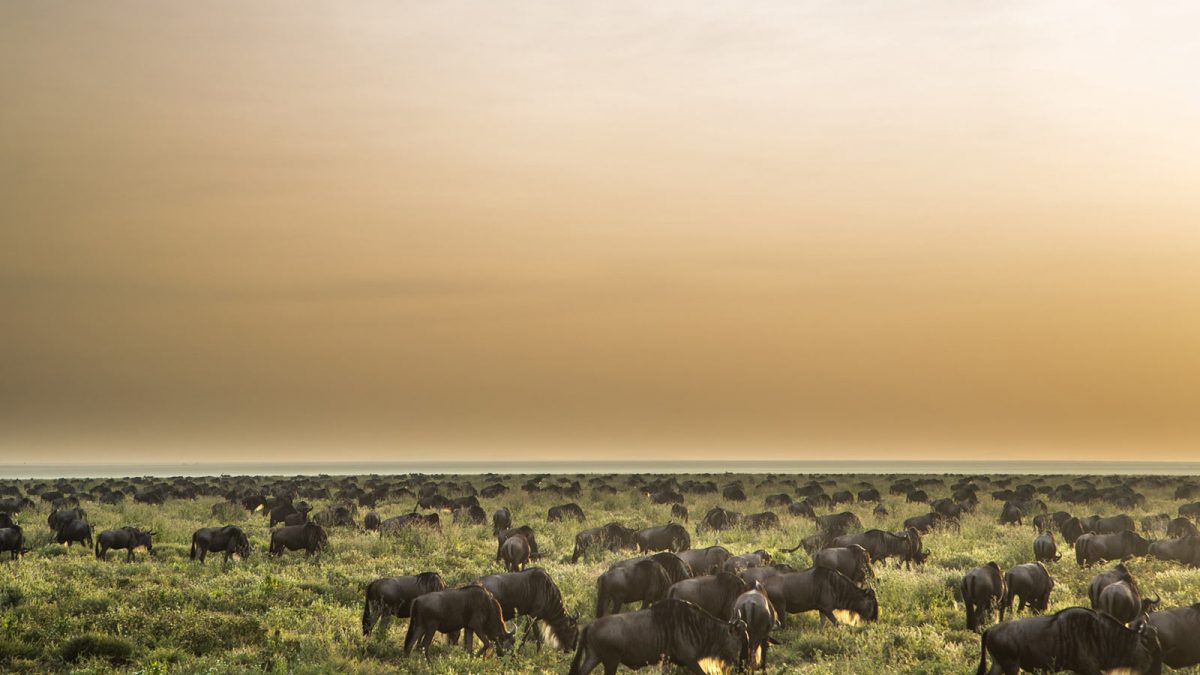
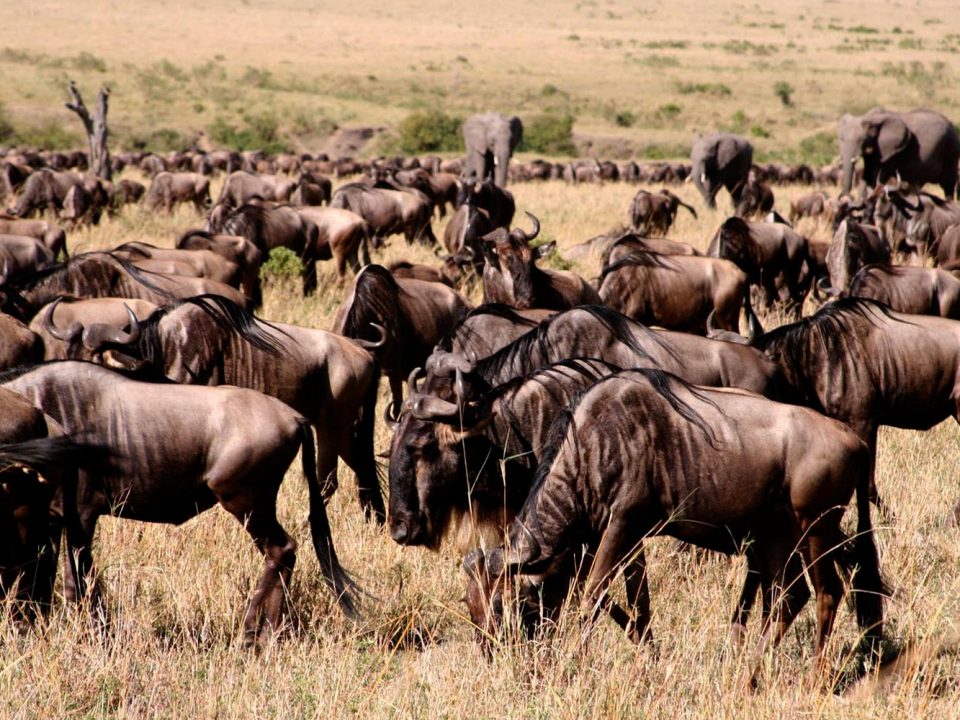
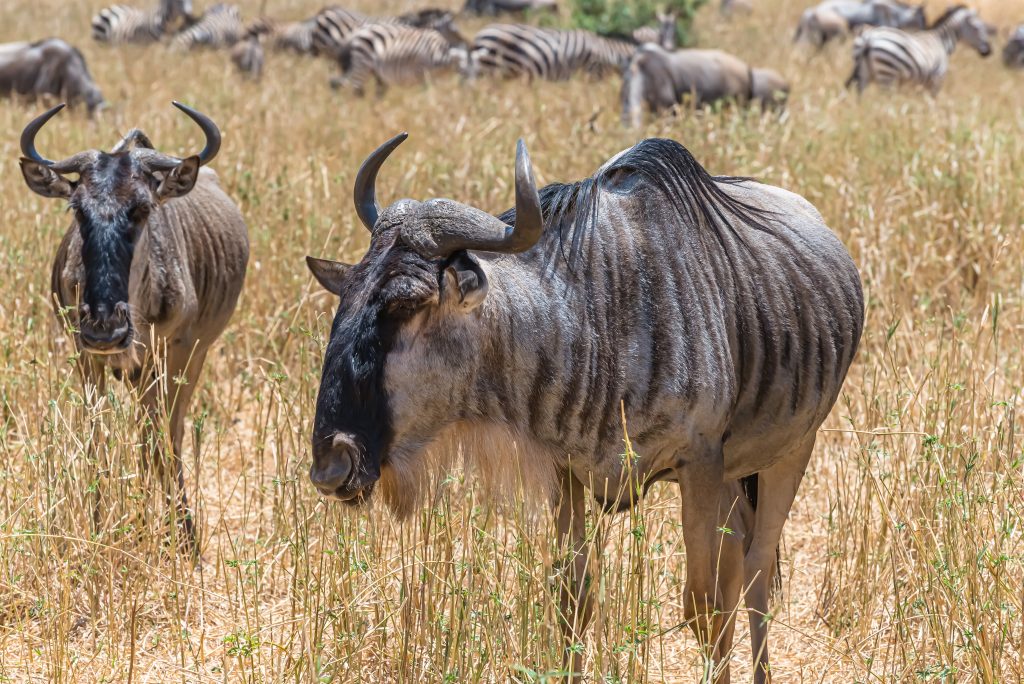
On an African safari; the first and most important understanding any traveler should carry into this comparison is that the Great Migration does not belong to the Serengeti or the Masai Mara it belongs to the entire ecosystem that connects them. Serengeti-Mara ecosystem is a single, continuous, and ecologically inseparable landscape of approximately 30,000 square kilometers that straddles the border between Tanzania and Kenya, and the wildebeest herds move across it without reference to national boundaries, visa requirements, or tourism marketing campaigns.
What this means in practice is that the question is not which destination offers the migration both do, genuinely and magnificently but which destination offers the specific migration experience you are seeking, at the specific time of year you are able to travel, at the specific budget and comfort level you require. Answering that question with precision and confidence is the purpose of this guide.
Serengeti: Year-Round Migration Across an Immense Stage.
Tanzania’s Serengeti National Park covers approximately 14,763 square kilometers of open savannah, acacia woodland, and riverine forest a landscape of such extraordinary scale and ecological complexity that no single visit can do more than sample its remarkable breadth.
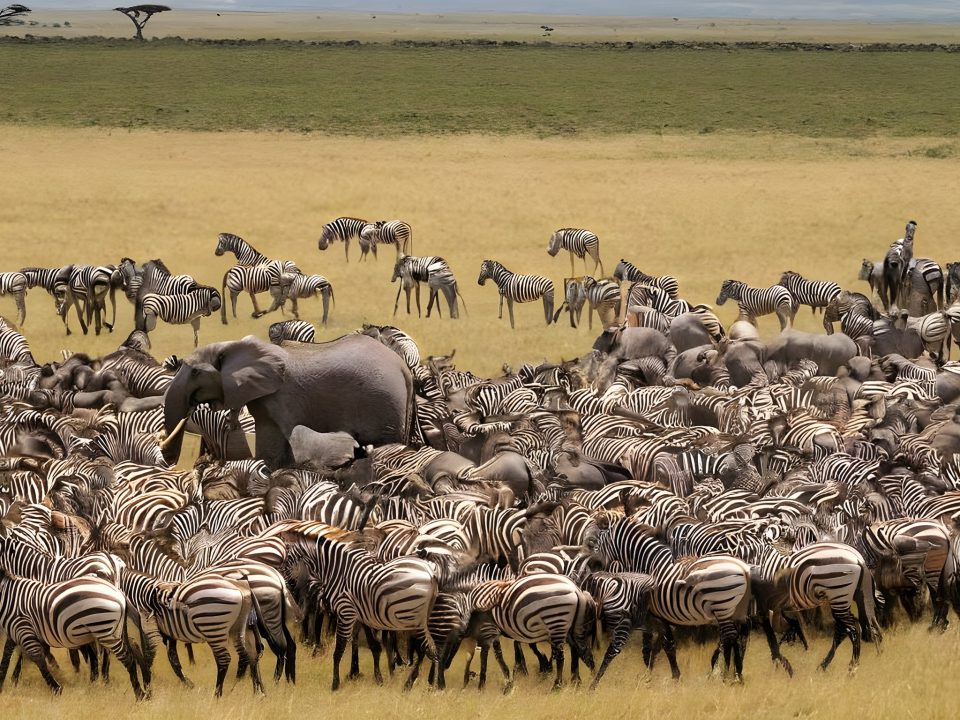
The Serengeti’s defining advantage in the migration comparison is simple and decisive the herds spend the greater part of the year within its boundaries. From the calving season on the southern plains in January and February, through the northward movement across the central Serengeti in April and May, through the dramatic Grumeti River crossings in the western corridor in June and July, and into the northern Serengeti’s Mara River crossings from July onward, the Serengeti offers migration encounters of extraordinary diversity across a much longer annual window than the Masai Mara alone can provide.
Calving Season; January to March.
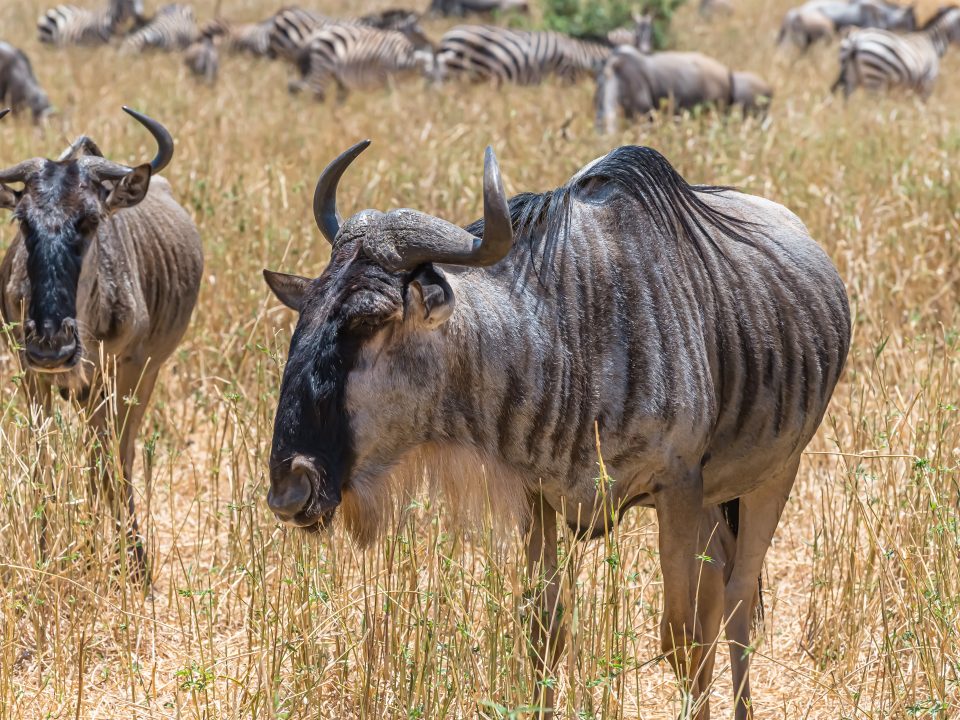
The southern Serengeti plains between January and March host one of the most extraordinary and least appreciated phases of the entire migration cycle. Approximately half a million wildebeest calves are born within a concentrated window of two to three weeks a biological strategy known as predator satiation that overwhelms the ecosystem’s carnivores through sheer numerical abundance. The result is a landscape of almost incomprehensible vitality and predator activity cheetahs, lions, hyenas, leopards, and wild dogs all converging on the abundance of vulnerable calves in scenes of raw, unmediated wilderness drama.
The Ndutu area of the southern Serengeti is the epicenter of calving season activity and one of the most rewarding migration destinations in the entire ecosystem during this period. Vehicle numbers are lower than during peak crossing season, accommodation options are diverse and often more affordable than their northern equivalents, and the quality of wildlife encounters combining the drama of predator activity with the extraordinary tenderness of newborn animals finding their feet in a dangerous world is genuinely and lastingly remarkable.
Grumeti River Crossings; June and July.
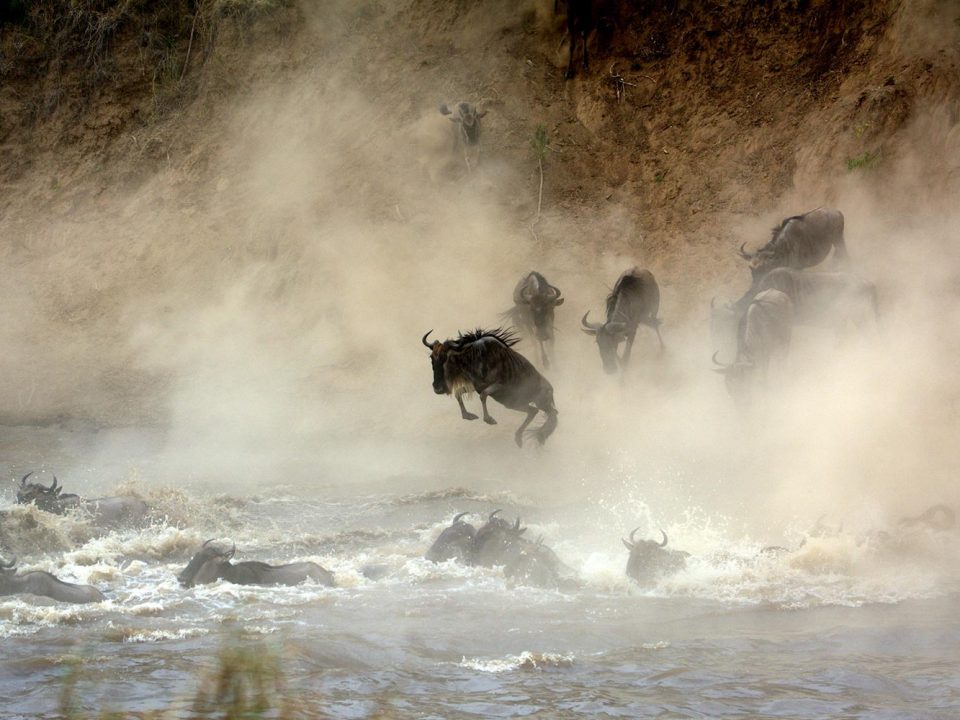
The western Serengeti’s Grumeti River crossings are the migration’s least celebrated and most underestimated dramatic moments. As the herds move northward through the western corridor in June and July, they must cross the Grumeti River a smaller waterway than the Mara but one whose resident crocodile population is among the largest and most formidable in the ecosystem.
Grumeti crossings offer a migration encounter of considerable drama with a fraction of the vehicle density that the Mara crossings attract during peak season. For the traveler who wants the crossing experience without the crowds, a strategic June or July stay in the western Serengeti represents one of the finest and most intelligently planned migration safari options available in 2026.
Northern Serengeti; July to October.
The northern Serengeti particularly the Lamai and Kogatende areas near the Mara River provides Mara River crossing sightings on the Tanzanian side of the border with considerably fewer vehicles than the Kenyan Masai Mara during the same period. The crossing experience here is broadly equivalent in drama and spectacle to the Kenyan side, but the conservancy and camp management policies of many northern Serengeti properties ensure vehicle limits that create a quality of crossing encounter significantly more intimate than that available at the busiest Kenyan crossing points.
Serengeti’s overall advantage is therefore the breadth of its migration offering the ability to witness meaningfully different phases of the annual cycle across a much longer window, in a landscape of greater scale and ecological diversity, with a range of accommodation options spanning every budget and comfort level.
Masai Mara: The World’s Most Famous Crossing Season.
Kenya’s Masai Mara National Reserve covers approximately 1,500 square kilometers of open grassland and riverine forest in southwestern Kenya the northern extension of the Serengeti ecosystem and the destination that, for the majority of the world’s migration safari Travellers, represents the definitive migration experience.
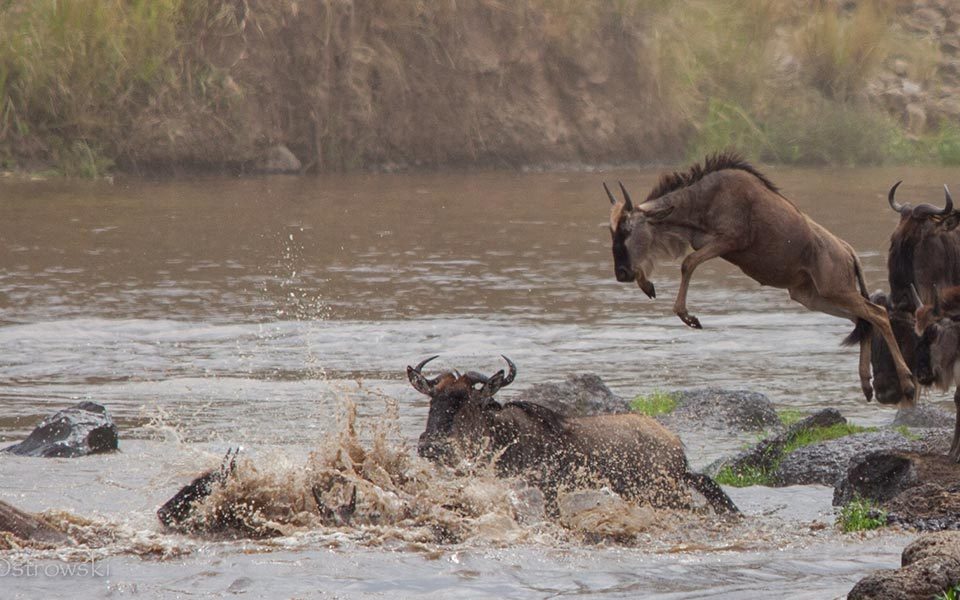
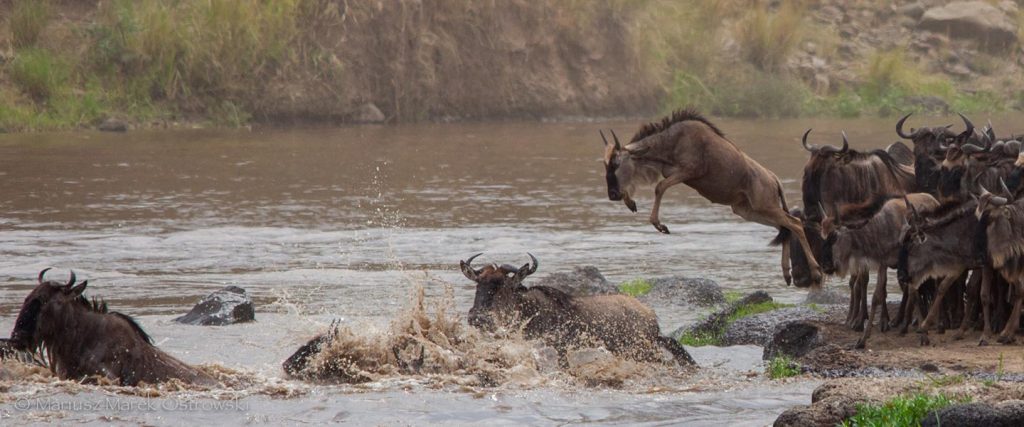
Masai Mara’s claim to migration supremacy rests on a single and genuinely extraordinary phenomenon the Mara River crossings between July and October, when the wildebeest herds pour across the Kenya-Tanzania border and plunge into the crocodile-patrolled waters of the Mara River in the scenes of thundering, desperate, magnificent chaos that have defined the global imagination of the Great Migration for generations.
Peak Crossing Season; August and September.
August and September represent the statistical peak of Mara River crossing activity the period when the largest volumes of wildebeest are present north of the Tanzanian border, when the river is at a level that encourages rather than prevents crossing attempts, and when the probability of witnessing many crossings within a single multi-day stay is at its highest.
Masai Mara during this period is also, it must be said honestly, at its most congested. Vehicle concentrations at the primary crossing points during August and September can be substantial a reality that experienced travelers either plan around through the strategic choice of private conservancy accommodation, or accept as the price of witnessing the world’s most famous wildlife spectacle during its most productive window.
Private Conservancies; The Mara’s Greatest Advantage.
The private conservancies bordering the Masai Mara National Reserve the Mara North Conservancy, Olare Motorogi Conservancy, Naboisho Conservancy, and Ol Kinyei Conservancy represent the finest migration safari experience available in the entire ecosystem, and possibly the finest safari experience available anywhere in Africa.
These conservancies enforce strict vehicle limits, permit off-road driving, and allow night game drives creating conditions for migration viewing of a quality and intimacy that the national reserve, with its higher visitor volumes and stricter vehicle management rules, cannot consistently match. The crossing encounters available from conservancy camps during peak season are witnessed by five or six vehicles rather than twenty or thirty, the guides can position their vehicles precisely rather than from designated tracks, and the overall experience is one of personalized, unhurried, deeply immersive wildlife viewing that justifies the premium rates these properties command.
Year-Round Wildlife Beyond the Migration.
The Masai Mara’s wildlife offering extends well beyond the migration season. Its resident Big Five populations lion prides among the largest and most studied in Africa, leopard sightings among the most reliable in Kenya, cheetah encounters on the open plains throughout the year make it one of the finest year-round game viewing destinations in East Africa. The Maasai cultural experience, the quality and diversity of its lodge and camp infrastructure, and its accessibility from Nairobi all contribute to a destination that delivers outstanding value across every month of the calendar year, not merely during the July to October migration window.
Head-to-Head Comparison: The Key Factors.
Migration Duration: The Serengeti wins decisively offering meaningful migration encounters across ten to eleven months of the year compared to the Mara’s three to four month crossing season.
Crossing Drama: Broadly equal the Mara River crossings on both sides of the border are of equivalent spectacle and emotional impact. The northern Serengeti offers greater exclusivity during peak season; the Kenyan Mara offers greater infrastructure and accessibility.
Vehicle Density: The Serengeti wins at most times of year with lower overall visitor numbers and greater geographic dispersion reducing the concentration of vehicles at any single sighting. The Kenyan conservancies are the exception, offering vehicle management as strict and effective as anywhere in Tanzania.
Accommodation Quality: Broadly equal at the luxury level both ecosystems offer world-class properties. The Masai Mara’s conservancy portfolio is arguably the most concentrated collection of exceptional safari camps anywhere in Africa. Tanzania’s northern Serengeti and Ndutu areas have their own outstanding properties.
Value for Money: Tanzania’s southern Serengeti outside peak season offers the most competitive pricing in the ecosystem for the quality of migration experience available. Kenyan conservancy properties command premium rates that, for many travelers, are worth every dollar but represent a significant investment.
Accessibility: The Masai Mara wins a forty-five-minute flight from Nairobi’s Wilson Airport versus a longer transfer to most Serengeti destinations. For the traveler combining a migration safari with a coastal stay or a broader Kenya itinerary, the Mara’s accessibility is a genuine and meaningful practical advantage.
Honest Verdict.
Serengeti is the better choice for the traveler visiting between January and June encompassing the extraordinary calving season, the dramatic Grumeti crossings, and the northward movement of the herds through one of the world’s great wildlife landscapes.
Masai Mara is the better choice for the traveler visiting between July and October particularly when staying in one of the private conservancies, where the combination of peak crossing season activity and exceptional vehicle management produces the finest migration experience available anywhere in the ecosystem.
And for the traveler with the time, budget, and ambition to experience both a combined Tanzania and Kenya itinerary that encompasses the calving season in the southern Serengeti and the river crossings in the Masai Mara the answer is the most honest and the most satisfying of all: go to both, and understand the migration as the complete and extraordinary annual cycle it truly is.