What makes Maasai Mara National Reserve unique?

You may learn about the most fascinating aspects of Kenya’s magnificent Maasai Mara park by visiting Maasai Mara National Reserve on a safari. One of Kenya’s most popular protected places, Maasai Mara National Reserve draws about half of the country’s tourists. Nobody who considers a wildlife safari in Kenya could overlook a visit to Maasai Mara National Reserve. The reserve offers an excellent wildlife safari experience that is not even partially represented by the park’s size. It is run by the Maasai community in the area, as opposed to other Kenyan protected areas that are overseen by Kenya Wildlife Services.
The reserve’s distinct qualities, which increase its appeal as a travel destination, are outlined in this article. At the expense of other national parks, the reserve offers these special experiences.
Local Maasai people.
The Maasai people have lovingly and without resentment guarded the reserve, keeping all the animals safe from poaching. Everybody in the neighborhood is benefiting from tourism. Every year on September 15, the Maasai community in the area celebrates Maasai Day. The people bid the wildebeest farewell in a ceremonial manner because this is when the migration of wildebeest begins its return trip to the Serengeti.

Largest national reserve in Kenya.
The largest national reserve in Narok County, the most well-known Maasai town in Africa, is part of the Maasai Mara National Reserve. The Maasai people, who are the area’s original occupants, are honored by the reserve’s name. The name meant the description of the vegetation of the area which is characterized by open savannahs dotted with circles of the Acacia trees. Maasai Mara was first created in 1961 as a wildlife sanctuary encompassing a small area around the stones. Later, when the villagers realized the need of conservation, the area was expanded.
High predator concentration.
Maasai Mara National Reserve is well-known for having a large population of predators, particularly lions and leopards. It is more likely that one will spot the bashful leopards along their trail. A fantastic documentary about uncommon black leopards that were captured on camera using night vision has been released. The pictures of the black leopard went viral in many social and travel documentation. The rocky kopjes and fig trees in the reserve are the primary locations for leopard sightings. The most well-known leopard in the Masai Mara National Reserve is called Bella, and it is primarily located around the Talek River. The only wild leopard that has been trained and utilized in films is Bella. The dominant male lion leads the big pride of Maasai Mara lions. The only place where lion populations are increasing quickly is Maasai Mara. In Maasai Mara National Reserve, there are numerous more predators such as jackals, cheetahs, and hyenas. One of the most watched documentaries about predators worldwide, The Big Cat Diary, was shot in the Maasai Mara National Reserve. This demonstrated the presence of nearly 600 lions in the reserve, dispersed throughout the ecosystem.
Big Five mammals.
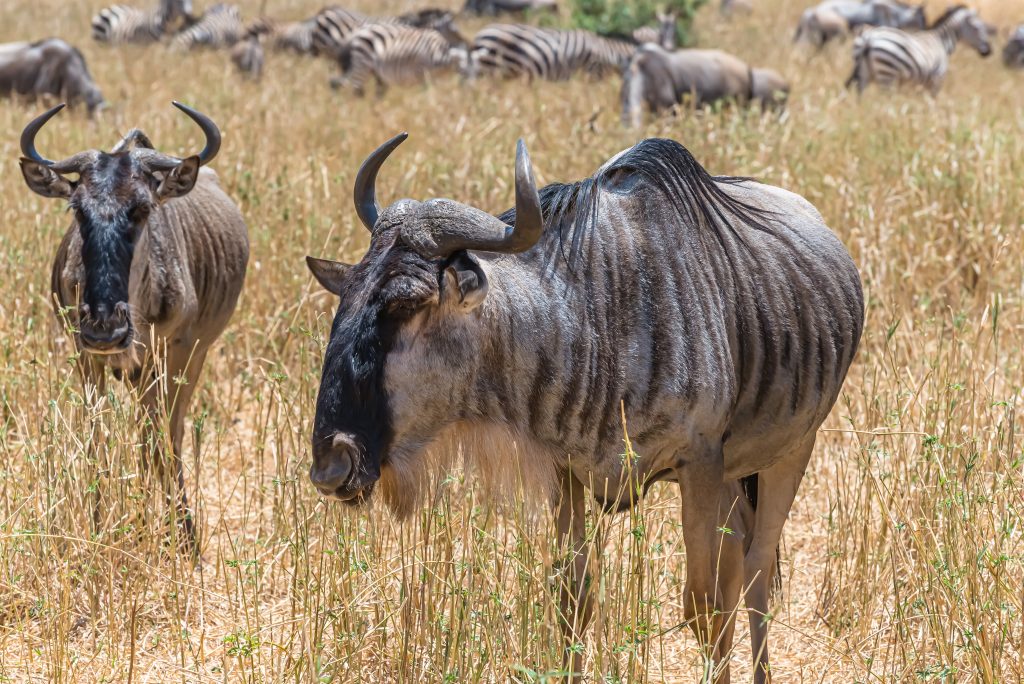
The Maasai Mara National Reserve is home to all five of the African Big Five: lions, leopards, elephants, buffaloes, and rhinoceroses. The population of the Big Five African mammals has been growing, particularly that of elephants. It is known that Maasai Mara is one of the only reserves in Africa where elephant numbers are sharply rising. The visitors can see all five of the Big Five in the shortest amount of time due to the reserve’s modest size. Because of this, going on a game drive in the park is enjoyable all year round. Hippos are among the other animals found in Maasai Mara. They can be seen in high numbers in the hippo pool near the powerful Mara River, where they coexist with enormous crocodiles. The wildebeest migration originates from this very river. Among many others, giraffes, warthogs, zebras, gazelles, elands, topis, cheetahs, hyenas, and dik-dik.
Wildebeest migration.
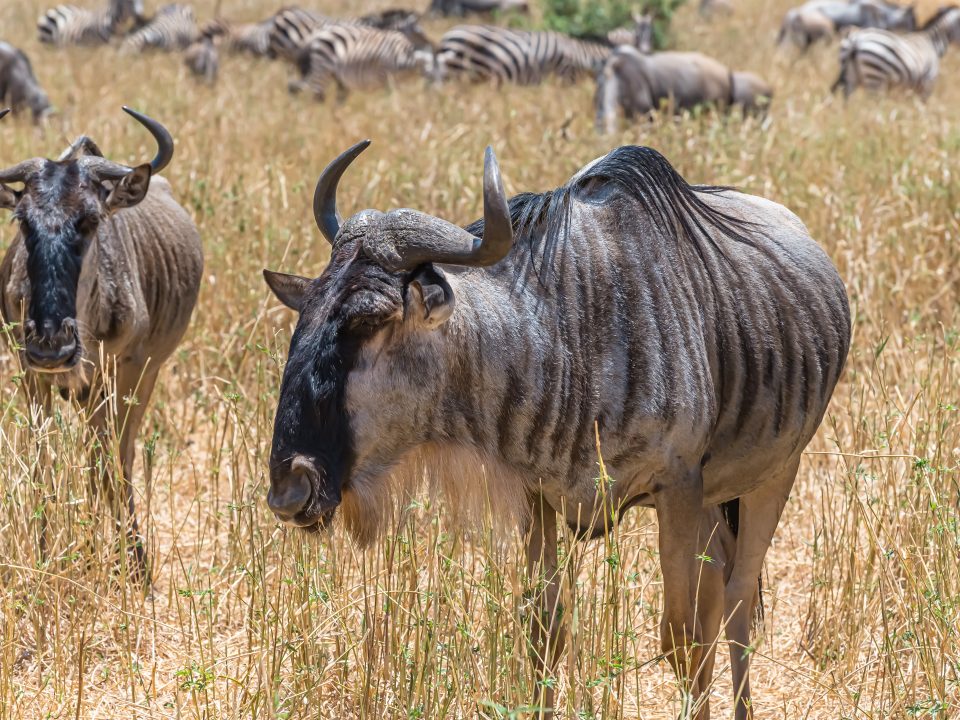
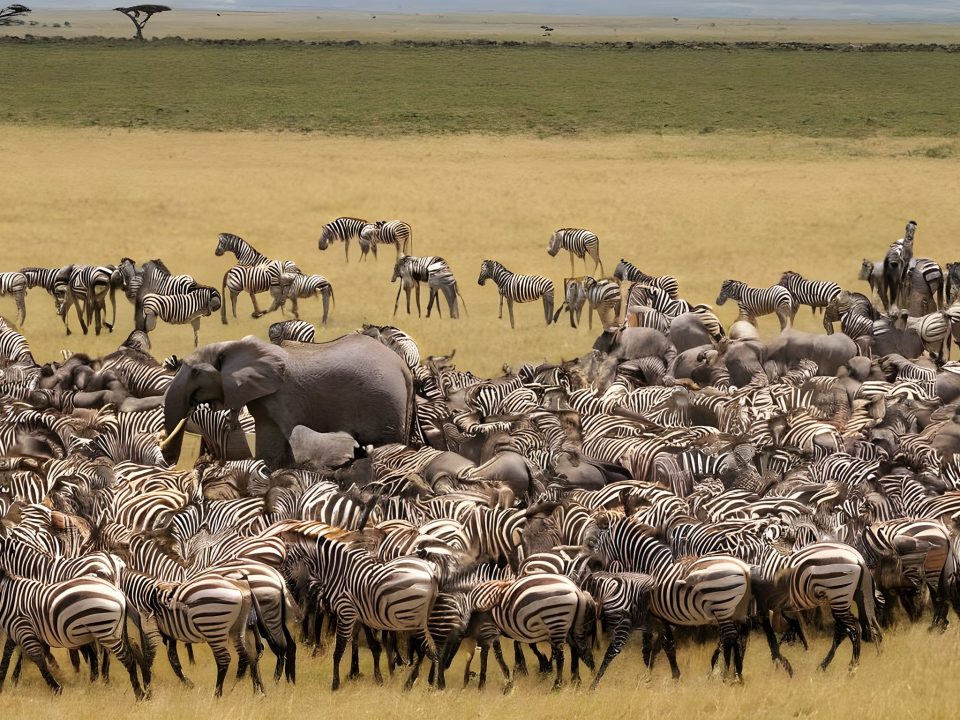
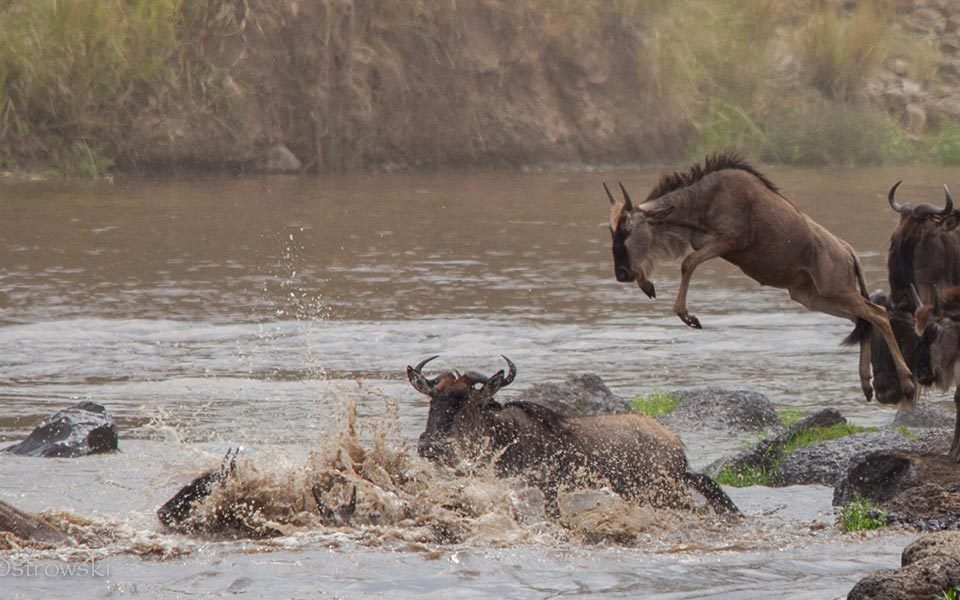
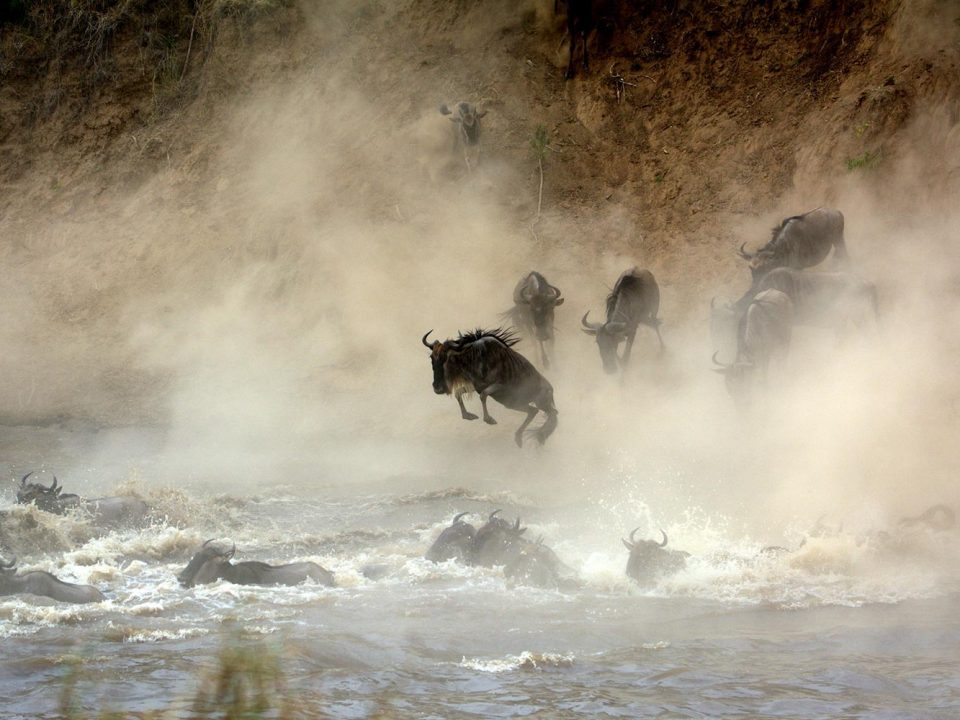
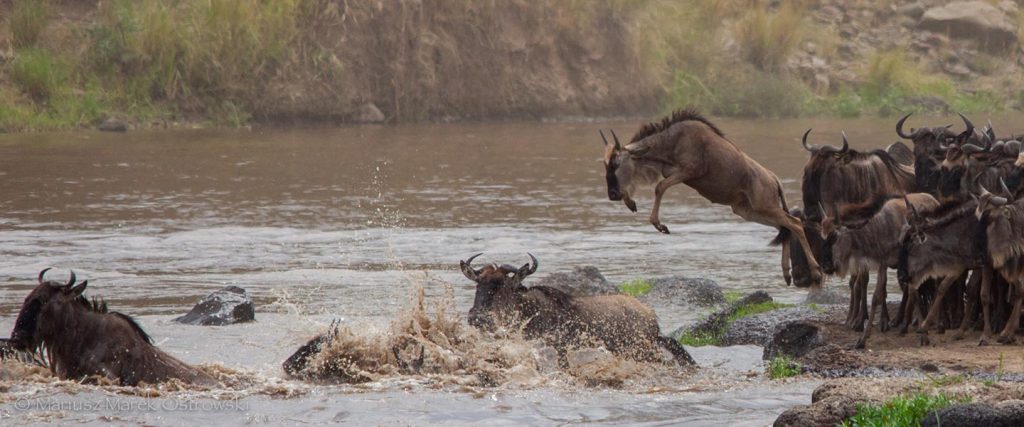
The yearly wildebeest migration, which takes place between Tanzania’s Serengeti National Park and Kenya’s Maasai Mara National Reserve, is the greatest animal movement on Earth. One of the eight facts about Maasai Mara National Reserve is that, with millions of movable wildebeest following the patterns of rainfall, it is one of the fortunate reserves in the world. When the wildebeests cross the Mara River in July, their migration comes to an end. Millions of grazers, including zebras and elands, travel in unison from the Serengeti National Park to the Maasai Mara National Reserve, including wildebeest. The big wildebeest migration begins in July and ends in October when the animals return to the Serengeti from a different location. Because the big Nile Crocodiles at the crossing site kill more people during the migration than the predators on either side the Serengeti and Masai Mara the migration is known as “survival for the fittest.” One of the world’s natural wonders is the migration of wildebeest.
Bird species.
More than 570 bird species have been recorded in the Maasai Mara National Reserve, including more than 50 kinds of prey birds, such as storks, vultures, and eagles. The bird list is extensive and contains a variety of species such as the Kori bustard, secretary bird, giant kingfisher, Schalow’s turaco, herons, Usambiro barbet, sooty chat, Southern Ground Hornbill, Magpie Shrike, spurfowl, and ostriches, among others. Birding is possible all year round.

Maasai locals.
The Maasai tribe is one of the few in Africa whose culture has endured for a long time unaltered. One of the protected regions in Africa where the people are peacefully and cooperatively departing together is the Maasai Mara National Reserve. In addition to protecting the animals, the Maasai community living in the park has enhanced the visitor experience by offering cultural trips in addition to wildlife viewing. Among the well-known African tribes with distinctive customs and beliefs that captivate visitors are the Maasai people.
Hyena research center.
An additional feature of Maasai Mara National Reserve is that it functions as a hub for hyena research. Because Masai Mara possesses Kenya’s largest concentration of hyenas, it was simple for Kenya Wildlife Services to establish a hyena study centre inside the reserve.
White Giraffes Family.
With even more extraordinary events taking place there, Maasai Mara National Reserve is a marvel of a tourist safari attraction. There was a singular, just born, uncommon zebra with black spots in place of strings. The unusual white giraffe family in the park has grown to include more than four individuals, who have given birth to baby white giraffes.