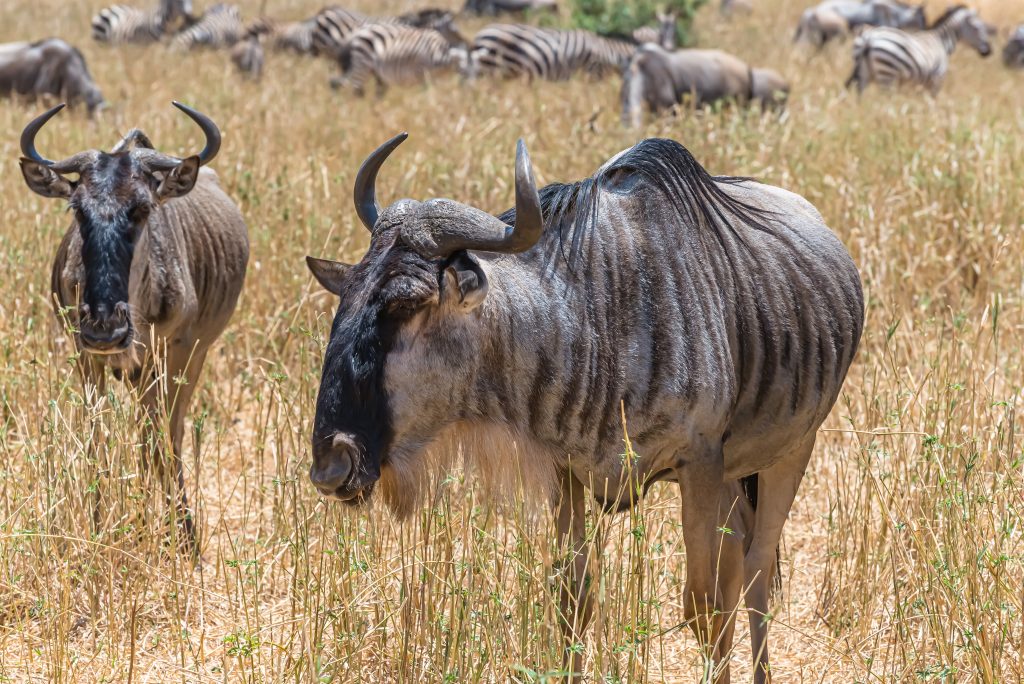
Masai Mara Photography tips for capturing the wildebeest migration.

Great Wildebeest Migration in the Masai Mara maybe the most photogenic wildlife event in the world. In addition to, the crazy river crossings scenes and the golden African savanna at dawn light, the opportunities for world-class photography are infinite. Nevertheless, achieving the “perfect shot” is not only about having a fancy camera; it is about animal behavior comprehension, settings mastery, and having the patience to let the magic happen. It doesn’t matter if you are a professional with a big lens or a hobbyist with a smartphone, these tips will allow you to capture images that will be true to the story of ” Greatest Show on Earth.”
1. Master Your Shutter Speed: Freezing the Action.
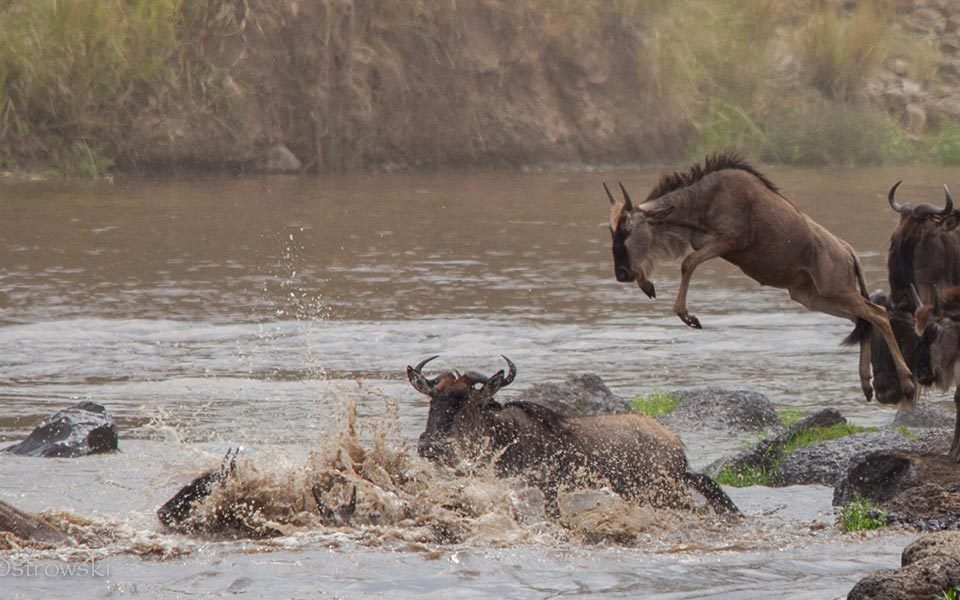
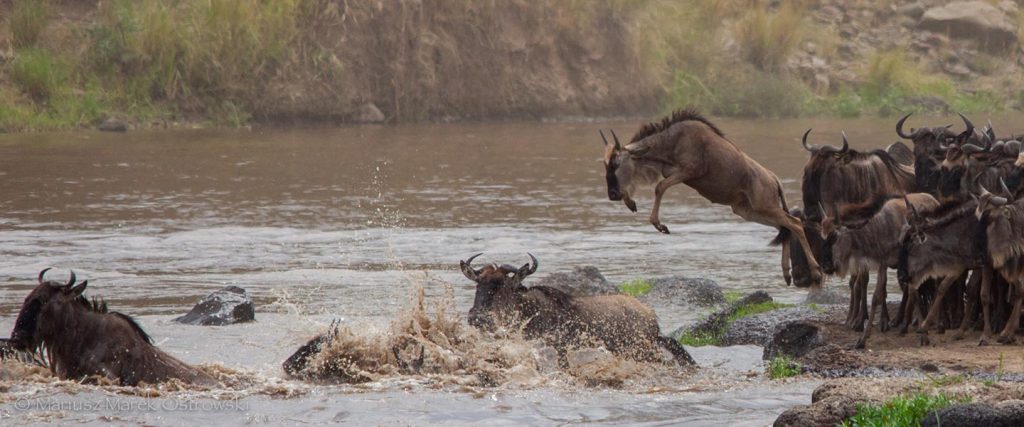
The migration accelerates really fast especially the river crossing part. If you want to capture the spray of the water thrown by the wildebeest as it jumps or the heat in the crocodile’s eyes, you have to adjust your shutter speed.
Freeze the Movement: In order to grab a moment of a wildebeest jumping into the Mara River, a fast shutter speed should be used for the pictures, 1/1000th of a second at least or even faster. Such a speed “freezes” the action, thus your subject (the animal and the water droplets) will be sharp. However, if you are photographing the hunting of lions or cheetahs, maybe you will need to go even higher to 1/2000th to get rid of motion blur.
Blur Experiment: At times, you probably want to expose the “migration disorder” as it is. By slowing your shutter speed to 1/30th or 1/60th of a second and “panning” (the technique where you move your camera at the same speed as a running animal), you will get a blurred background while the subject will be relatively sharp. This method communicates speed and is excellent for capturing large moving herds.
2. The Power of Perspective: Eye-Level and Wide Angles.
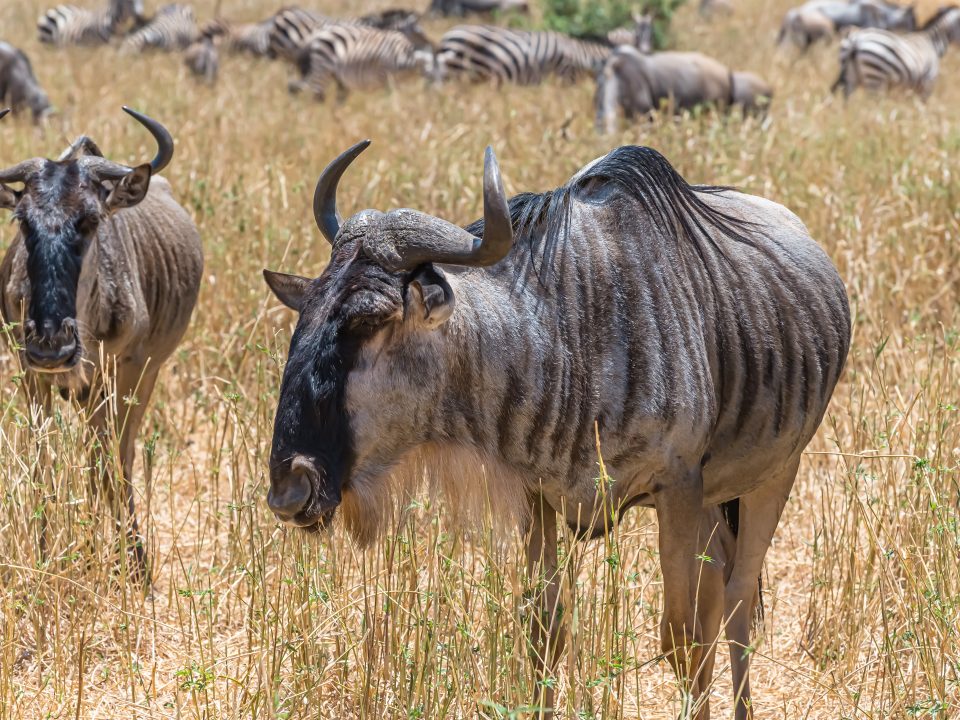
Usually, beginners think that the most interesting thing that could possibly be photographed is an animal’s head chrome. Of course, these pictures are amazing but the migration represents both the creatures and their surroundings.
Get Down Low: If you have an opportunity, why not ask your guide for places where you are allowed to take shots from a lower point or even a different vehicle that could give you a lower shooting angle. If you get a chance of being on the same “eye level” with the wildebeest then you will be able to capture that viewer becoming a part of the herd. The lower perspective adds the emotional element to the photos.
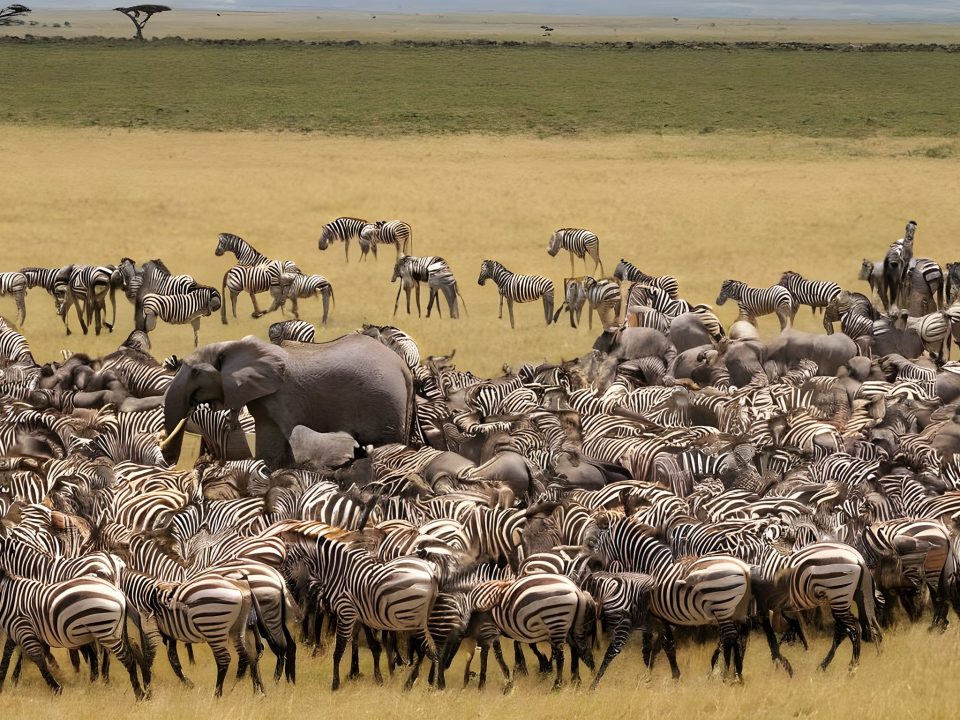
Tell the Whole Story: Remember to capture the vastness of the Mara with a wide-angle lens (or zoom out). One lone wildebeest is an exquisite portrait, but a photo of 10,000 wildebeests going to the edge of the world is a “Migration Story.” The photos could be framed in the shape of the flat-topped acacia trees giving the feeling of photographing in a very nature-rich African savannah.
3. Anticipating the “Crossing”: Patience and Timing.
The Mara River crossing is a quite significant aspect of the motion picture. This shot is one of the hardest to capture and most people desire it. It needs not just hours of waiting but also gaining the knowledge of the animal’s body language.
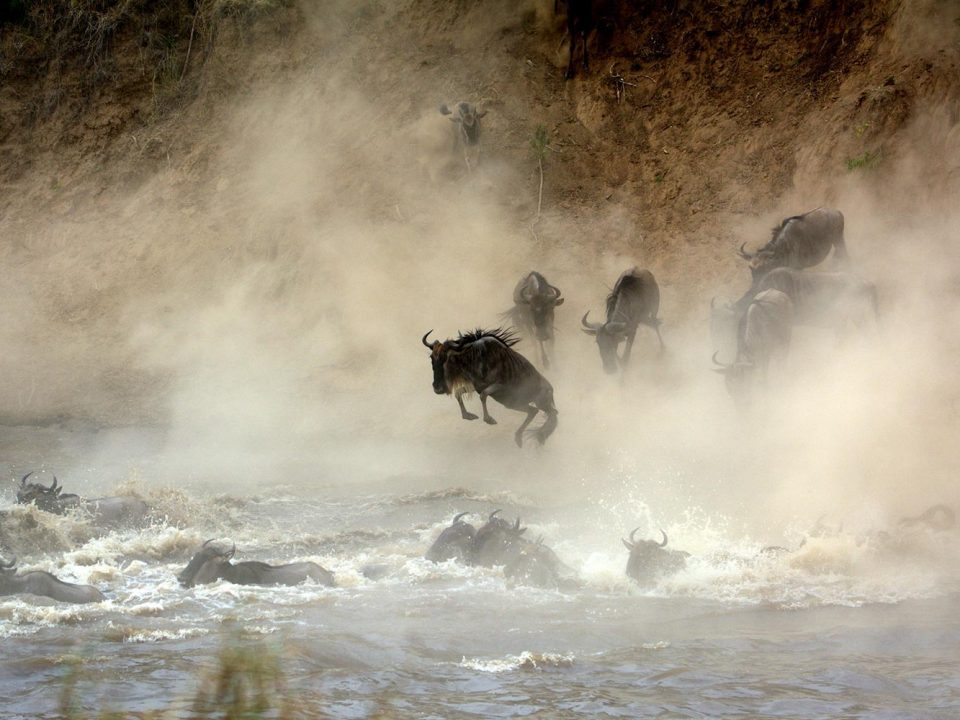
The “Leading” Wildebeest: The wildebeest herd at the riverbank often waits for hours before starting a crossing. The “leaders” are the boldest ones who go right up to the edge looking for a safe path. So keep your camera on hand and ready to shoot even before they finally decide to jump. The moment the first one goes, all the rest jump as well, though the “line” of it is rather chaotic, and that is when you can start real photography work.
Focus on the Eyes: When the herd is crossing a river, you may be able to get hold of one of nature’s most profound images if you fix the camera on the eyes of the animals. A picture of a wildebeest on the verge of drowning is, of course, very effective, but if you caught it right at the moment when its eyes reflect terror or at least determination, then you have an absolute masterpiece. If your camera is so advanced as to have “Animal Eye-Tracking” capability, why wouldn’t you use it at exactly that moment.

4. Lighting: Leveraging the “Golden Hours”
The sun in the Masai Mara is either your best imagination or the worst reality. The sun directly can be extremely bright and produce a ‘flat’ light at a typical noon hour, which results in the creation of dark areas right under the animals’ eyes.
The Golden Hour: Gentle, warm, and orange light can be observed approximately during the first hour after sunrise and the last hour before sunset. This “Golden Hour” makes the wildebeests’ coats to shimmer and gives a nice soft blur in the background. Silhouette photography can also be experimented with at this time of day. Get yourself in a position where the animal comes between the sun going down and you so that you can take a photo of a creature’s outline against a stunning African sky which is ablaze with colors.
Mid-Day Strategy: It might be a better idea to convert your photos into monochrome if a river crossing takes place at noon when the sun is at its highest point. The transition between the areas of light and shadow created by the ecliptic sun at this time of day is usually more effective in black and white. In addition, the monochromatic pictures emphasize the texture of the water, the dust, and the animals’ muscles.
5. Equipment Essentials: Beyond the Camera.
Equipment and tools have to be appropriate if you want to be successful. The Masai Mara is an area that experiences a lot of dust and heavy vehicles traveling on uneven roads, and so it is very important for you to protect your gear.
Support and Stability: Safari vehicles can be vibrating or slightly moving while people are shifting seats. To rest your lens on the window or roof edge. It gives you the much-needed stability to take a sharp picture without carrying a tripod.
Dust Protection: The Mara is very dusty during the migration season. Never change your lenses when the vehicle is moving or in a dusty location. Be sure to have a soft cloth and with you so you can clean your glass regularly. Conclusion: If you want to capture the real wonderful of nature, you must go beyond just taking pictures in a photography session that takes place in the Masai Mara during the Great Migration. The pictures that best represent this kind of work are those in which the raw emotions of survival can be felt the struggle in the river, the dust of the plains, and the intimate moments of a mother with her calf.