Top 7 Most dramatic Mara River crossings in History.

Maasai Mara National Reserve, is Kenya’s wonderful haven that, provides the final and most stage of the Great Wildebeest Migration. The Mara River is just the opposite: a rapid, victim-eating river that two million wildebeest and zebra need to wade through to get to the new grass. The “history” of the Mara River cross is really more of a story about various dates. It is more the extreme nature conditions that symbolize nature’s brutal power and repetitive, that get to the very core of the story. Those seven episodes are the flashiest and least forgettable scenes that people have observed during this annual event, taken by film crews and photographers throughout the years.
1. The Stampede of Desperation: The Plunge Initiation
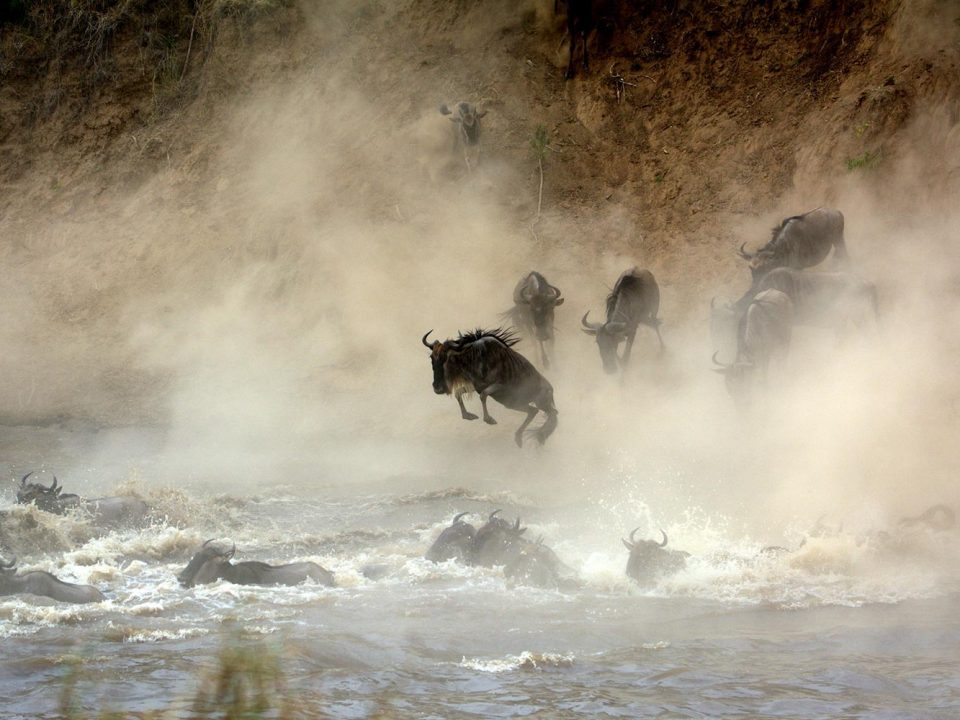
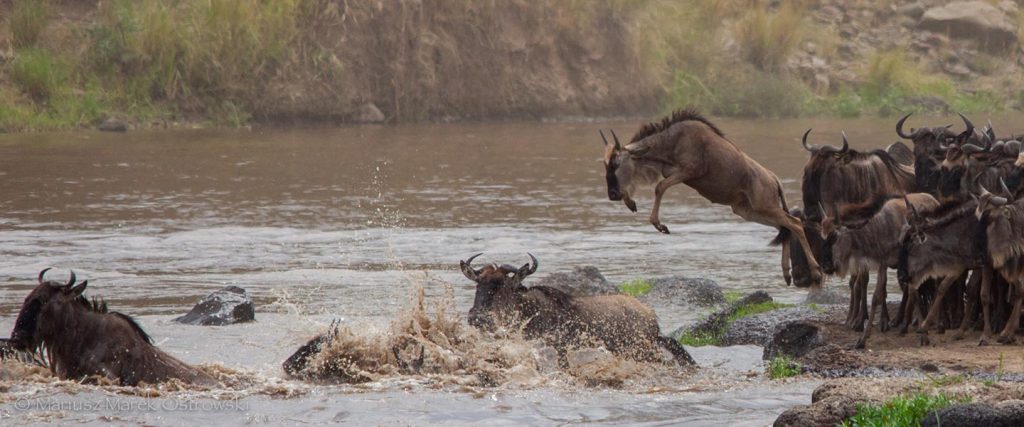
The most prominent and at the same time the most sudden and dramatic crossing that has ever occurred, to be precise, is the one which starts with an all-of-a-sudden, disorderly stampede. When the herds lack water, and there’s a lot of tension and fear among them, desperation, by hunger and thirst. A single leader takes the run down the steep bank, with the rest following in a cutting-edge manner altogether uncontrollably. This not just any organization; it is a type of the major wave in nature, where the collective surge is so powerful that no one animal can stop it. The noise is earsplitting; it’s a combo of thundering hooves, panicked bellows, and a lot of splashing. The biggest hazard, in this stampede, is often the crowd itself. The old, sick or young animals are unmercifully pushed down and drowned by the momentum. As a consequence, the starting of the crossing becomes a petrifying, fatality-heavy event.
2. The Crocodile Gauntlet: Primal Ambush and Predation.
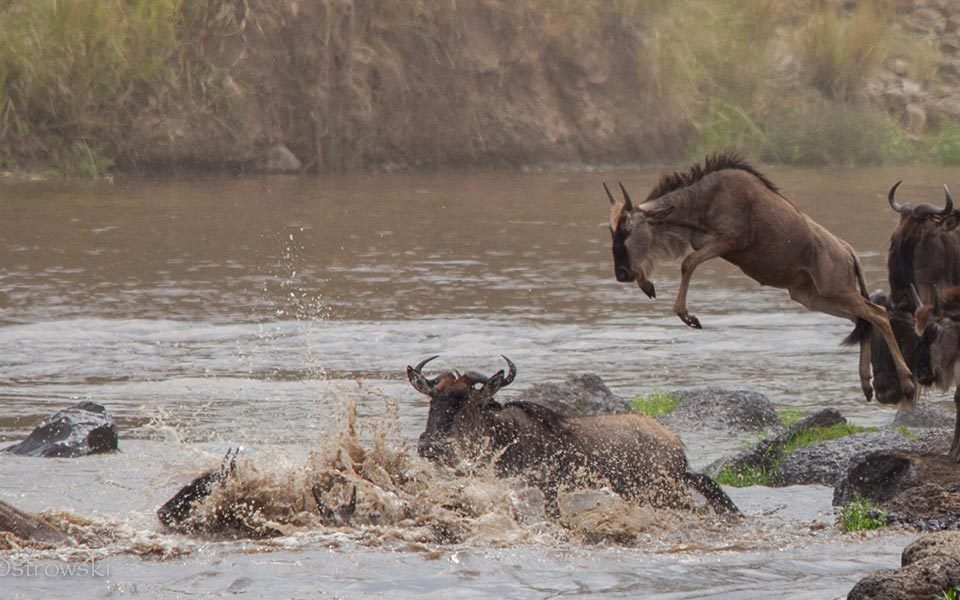
Numerous huge Nile Crocodiles and very cold-blooded masters of ambush are living in the Mara River. The “Crocodile Gauntlet” is used to describe the time when the wildebeests have to swim over where the crocodiles are. The wild life is basically the stark fear that they show when racing frightened through the crocs’ zone. The movement of the wildebeests is very fast and chaotic, so the attack of the crocodiles is so focused and slow that it’s paradoxically eerie. The Nile Crocodiles arise from the water in an explosive manner, pulling their prey below the water in a brisk, wild manifestation of the power of nature.
3. The Vertical Bank Struggle: Conquering the Mud Cliffs.
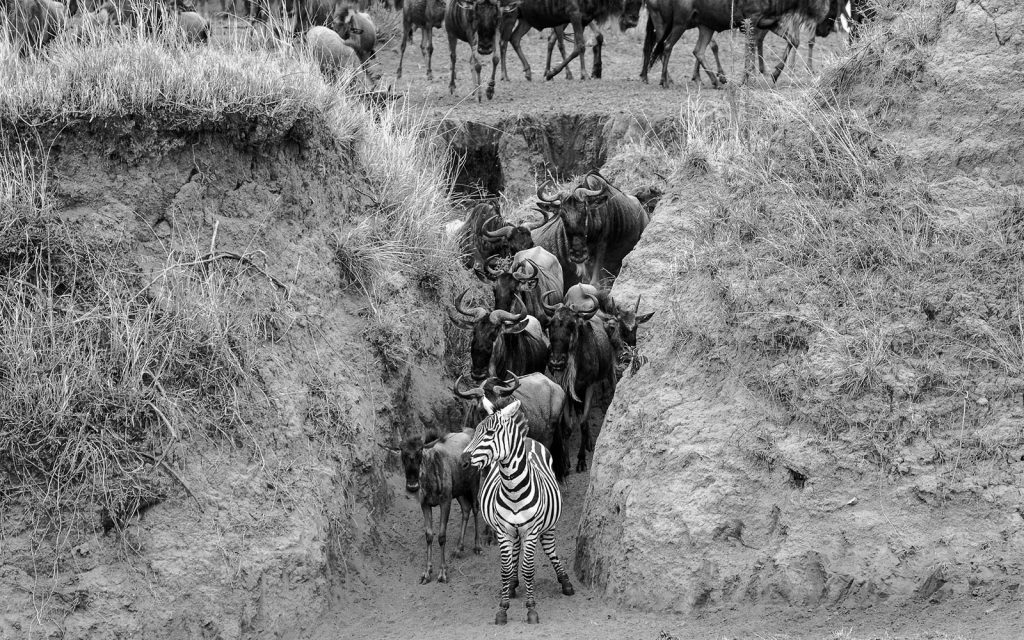
A few parts are there where the river is surrounded by raised, vertical, generally mucky cliffs. The river crossing’s not over when the animals finally get to the opposite shore; they have then to find power in themselves to fight the treacherous banks. This is purely a struggle that is built on physical exhaustion. It happens that the most daring and survivable animals are the ones that still become victims, as the ground geology there the slippery, vertical cliffs make it quite possible.
4. The Drowning Disaster: The Cost of Miscalculation.
Sadly, some of the most tragic times are connected with the death of many animals by drowning. Such tragedies happen when the upfront animals make a wrong decision for the entry point and are caught by an unseen or too strong current, or end up in a sudden water cutoff. Accompanied by the mass force of the animals behind, the situation becomes even more terrible; the trapped animals are pressed against the front ones who are the last to escape. As a result, many of them may be just swept away from there, after the tragedy, bodies of hundreds of animals that are lying on the rocks or are caught in the submerged logs are just a vivid picture of the river’s indifferent power. Although the situation is dreadful, these dead bodies is what maintains the river’s ecosystem; the fish and scavengers are now the ones that are being fed, emphasizing the cyclical nature of life and death in the Mara.
5. The Mid-River Turnaround: The Double-Cross Chaos.
The crowd’s psychology can in no time turn into group failure. The “Double-Cross” takes place when a large part of the swimming herd, perhaps taken by a sudden noise or a dangerous beast close, now suddenly comes back. Passing by the bank from which they have just come, they get in the way of another wave swimming upstream due to the current. This causes the stream to move rapidly and also create a kind of swirling pattern in the middle of the current making it dangerous for the animals to pass through, apart from the fact that they are in the danger zone where the predators could go about their business very easily. This whole confusion seriously makes a statement, as the chaos and the wolves-in-the-hen-house kind of situation sprung from a common fear and the inability to decide.
6. The Lion Ambush: The Final Land Gauntlet.
Predators are not always in water. The most exciting and dramatic moments are when the lions decide to ambush wildebeest or when hyenas gang up and wait on the land to catch their prey. These land predators are well aware of the fact that in that very second when the wildebeest come out of the water, they are in the most vulnerable position possible tired, blind, and full of muddy slush. One can often find lions hiding at the back of natural shelters or rocky formations located right close to the water’s margin. This final “Land Gauntlet” is marked by the fact that the lion is so quick to pounce on the poor, tired preys that they cannot even return its movement, this serves as a demonstration that reaching the ground is just half of the water battle.
7. The Mid-River Stalemate: The Pause of Paralysis.
An astounding yet super intense occurrence is when the “Mid-River Stalemate” takes place. This is when the leading animals achieve a deep-water spot or get into a submerged obstacle, and without a jolt or a yell they freeze right in the middle, motionless out of fear. The crossing comes to a halt. The outstretched line of the animals in the current unoccupied corner shows the inert and the exposed, who cannot, first, go back and who cannot, second, push ahead. The suspense of the standoff could be felt as the whole herd was lying still waiting for one brave animal to break the impasse. This is a great example that at some attempts the psychological load of the Mara River crossing can easily undo the survival instinct with the fear of the unknown energy in the river.